Birdr

Shore Plover vs Double-banded Plover

Thinornis novaeseelandiae versus Anarhynchus bicinctus

Play a quiz with Shore Plover and Double-banded Plover
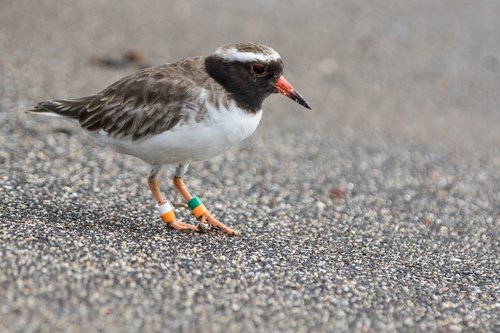
Shore Plover (Thinornis novaeseelandiae) Shore Plover
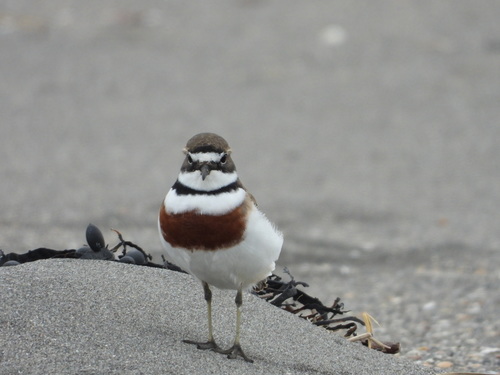
Double-banded Plover (Anarhynchus bicinctus) Double-banded Plover

Media

Loading…

In short

The Shore Plover and Double-banded Plover can be distinguished by their habitat preferences and plumage details. The Shore Plover is typically found on rocky shores with tidal pools, while the Double-banded Plover prefers sandy beaches and estuaries. In terms of plumage, the Double-banded Plover has a distinctive double breast band during breeding season, which the Shore Plover lacks.

Identification tips

  1. Look for the double breast band on the Double-banded Plover during breeding season. 2. Observe the habitat: rocky shores suggest Shore Plover, sandy beaches suggest Double-banded Plover. 3. Note the overall body shape: Shore Plovers appear slightly more robust.

Size

Both species are small plovers, but the Shore Plover is slightly more robust in appearance.

Plumage

The Shore Plover has a predominantly brown upper body with a white underbelly and lacks the distinctive double breast band of the Double-banded Plover. The Double-banded Plover, especially in breeding plumage, features two dark bands across the chest.

Behaviour

Both species exhibit typical plover behavior, such as quick movements and foraging along the ground. However, the Shore Plover is more likely to be seen on rocky substrates.

Habitat

Shore Plovers are found on rocky shores with tidal pools, while Double-banded Plovers prefer sandy beaches, estuaries, and mudflats.

Voice

Vocalizations are not a primary distinguishing feature between these two species in the field.

Submit a better description

Use the same sections as the comparison. Your text is published immediately.

The Shore Plover and Double-banded Plover can be distinguished by their habitat preferences and plumage details. The Shore Plover is typically found on rocky shores with tidal pools, while the Double-banded Plover prefers sandy beaches and estuaries. In terms of plumage, the Double-banded Plover has a distinctive double breast band during breeding season, which the Shore Plover lacks.

  1. Look for the double breast band on the Double-banded Plover during breeding season. 2. Observe the habitat: rocky shores suggest Shore Plover, sandy beaches suggest Double-banded Plover. 3. Note the overall body shape: Shore Plovers appear slightly more robust.

Both species are small plovers, but the Shore Plover is slightly more robust in appearance.

The Shore Plover has a predominantly brown upper body with a white underbelly and lacks the distinctive double breast band of the Double-banded Plover. The Double-banded Plover, especially in breeding plumage, features two dark bands across the chest.

Both species exhibit typical plover behavior, such as quick movements and foraging along the ground. However, the Shore Plover is more likely to be seen on rocky substrates.

Shore Plovers are found on rocky shores with tidal pools, while Double-banded Plovers prefer sandy beaches, estuaries, and mudflats.

Vocalizations are not a primary distinguishing feature between these two species in the field.

Discard your changes?

You have unsaved edits. If you leave now, those changes will be lost.

Shore Plover · Double-banded Plover · My Tricky Birds