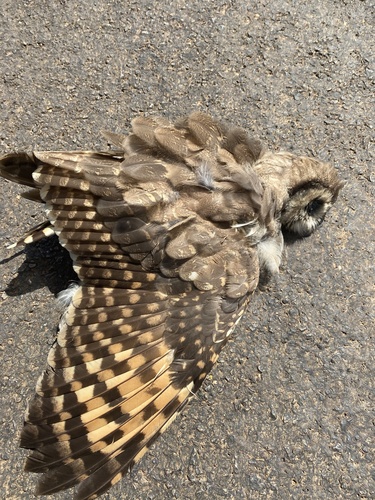
Short-eared Owl vs Marsh Owl
Asio flammeus versus Asio capensis
Play a quiz with Short-eared Owl and Marsh Owl
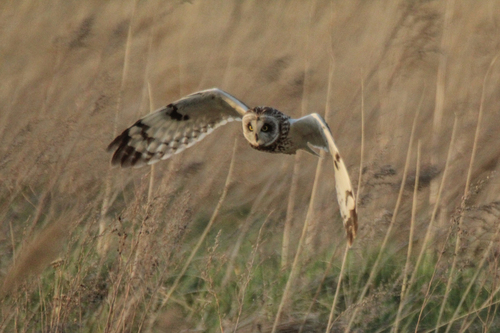
Short-eared Owl
Marsh Owl
In short
The Short-eared Owl and Marsh Owl are similar in size and structure but can be distinguished by their facial patterns and habitat preferences. Short-eared Owls have more pronounced facial disks and are often seen in open fields, while Marsh Owls prefer marshy areas and have a less distinct facial disk.
Identification tips
- Facial Disk: Short-eared Owls have a more pronounced facial disk with dark eye patches.
- Habitat: Look for Short-eared Owls in open fields and Marsh Owls in marshy areas.
- Flight Behavior: Short-eared Owls are more likely to be seen flying during the day.
Size
Both species are medium-sized owls with similar wingspans and body lengths.
Plumage
Short-eared Owls have a more pronounced facial disk with bold, dark eye patches and a lighter overall plumage. Marsh Owls have a less distinct facial disk and a more uniform brown coloration.
Behaviour
Short-eared Owls are often seen flying low over open fields during the day, especially at dawn and dusk. Marsh Owls are more crepuscular and tend to stay closer to marshy or wetland areas.
Habitat
Short-eared Owls prefer open fields, grasslands, and tundra, while Marsh Owls are typically found in marshes, wetlands, and reed beds.
Voice
Vocalizations are not a primary distinguishing feature in the field for these species.