
Spike-heeled Lark vs Southern Brown-throated Weaver
Chersomanes albofasciata versus Ploceus xanthopterus
Play a quiz with Spike-heeled Lark and Southern Brown-throated Weaver
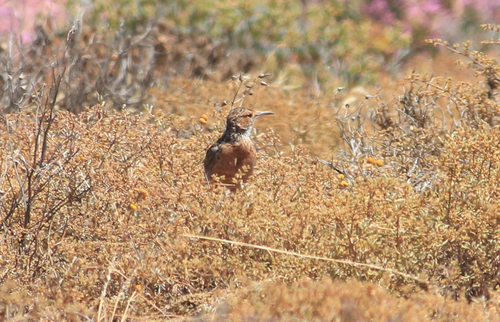 Spike-heeled Lark
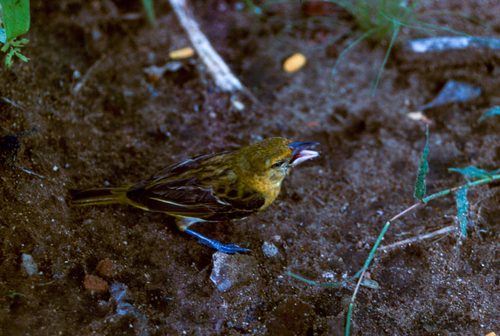 Southern Brown-throated Weaver
In short
The Spike-heeled Lark and the Southern Brown-throated Weaver can be distinguished primarily by their structure and habitat preferences. The lark is a terrestrial passerine with adaptations for ground dwelling, while the weaver is more arboreal and associated with wetland habitats.
Identification tips
Structure: Look for the Spike-heeled Lark's ground-dwelling behavior and adaptations for terrestrial life, such as its spike-like heel. Habitat: Note the habitat; larks are in open, dry areas, while weavers are near water. Plumage: Consider the lark's variable plumage influenced by soil, contrasting with the weaver's more uniform appearance.
Plumage
The Spike-heeled Lark exhibits extensive variation in coloration due to its many subspecies, often influenced by local soil conditions, whereas the Southern Brown-throated Weaver shows more consistent plumage patterns typical of weavers.
Behaviour
The Spike-heeled Lark is primarily ground-dwelling, often found in open areas, while the Southern Brown-throated Weaver is more likely to be seen in trees or near water, reflecting its arboreal and wetland-associated lifestyle.
Habitat
Spike-heeled Larks are found in open, terrestrial environments across southern Africa, avoiding agricultural areas, whereas Southern Brown-throated Weavers are associated with wetlands and areas near water.
Spike-heeled Lark · Southern Brown-throated Weaver · My Tricky Birds