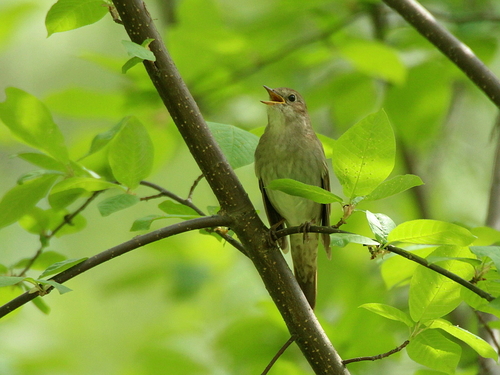
Spotted Flycatcher vs Thrush Nightingale
Muscicapa striata versus Luscinia luscinia
Play a quiz with Spotted Flycatcher and Thrush Nightingale
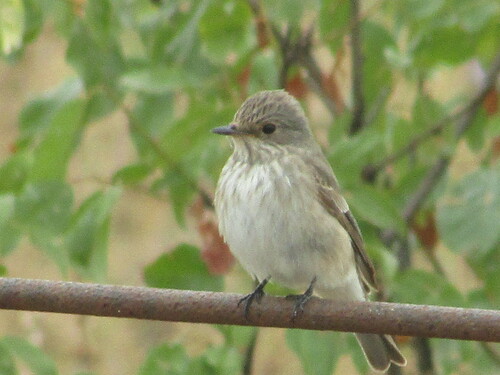
Spotted Flycatcher
Thrush Nightingale
In short
The Spotted Flycatcher and Thrush Nightingale can be distinguished primarily by their structure and behavior. The Spotted Flycatcher is more slender with a longer tail and a more upright posture, while the Thrush Nightingale is stockier with a shorter tail and a more horizontal stance. Vocalizations are also a key difference, with the Thrush Nightingale known for its rich, melodious song.
Identification tips
- Structure: Look for the Spotted Flycatcher's slender build and longer tail versus the Thrush Nightingale's stockier appearance and shorter tail.
- Plumage: Note the subtle streaking on the Spotted Flycatcher's breast compared to the more uniform brown of the Thrush Nightingale.
- Behavior: Observe the Spotted Flycatcher's habit of perching openly and sallying for insects, unlike the more secretive Thrush Nightingale.
- Vocalization: Listen for the Thrush Nightingale's rich, melodious song, which is a key distinguishing feature.
Size
The Spotted Flycatcher is generally more slender and slightly smaller than the Thrush Nightingale, which appears stockier.
Plumage
Spotted Flycatchers have a more uniform brown-grey plumage with subtle streaking on the breast, whereas Thrush Nightingales have a warmer brown tone with a more uniform appearance and lack the streaking.
Behaviour
Spotted Flycatchers often perch in open areas, sallying out to catch insects, while Thrush Nightingales are more secretive, often staying low in dense vegetation.
Habitat
Spotted Flycatchers are typically found in open woodlands, gardens, and parks, whereas Thrush Nightingales prefer dense undergrowth in forests and thickets.
Voice
The Thrush Nightingale is noted for its rich, varied song, which is more melodious and complex compared to the simpler calls of the Spotted Flycatcher.