Birdr

Thrush Nightingale vs Common Nightingale

Luscinia luscinia versus Luscinia megarhynchos

Play a quiz with Thrush Nightingale and Common Nightingale
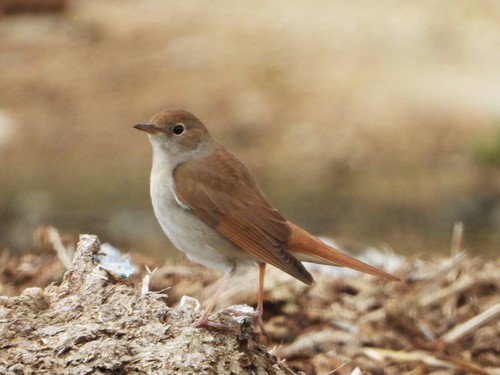
Thrush Nightingale (Luscinia luscinia) Thrush Nightingale
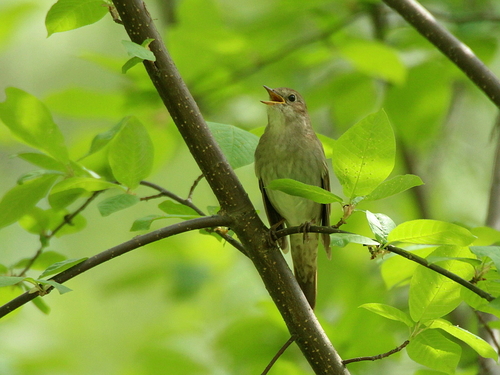
Common Nightingale (Luscinia megarhynchos) Common Nightingale

Media

Loading…

In short

The Thrush Nightingale (Luscinia luscinia) and the Common Nightingale (Luscinia megarhynchos) are both small songbirds with similar names, but they exhibit distinct differences that can be noted in size, plumage, habitat preferences, and vocalizations. The Thrush Nightingale is generally larger, has a more distinctive song, and prefers more open habitats compared to the more secretive Common Nightingale, which is smaller and often found in dense thickets.

Identification tips

  1. Birds of the World Similar-Species Diagnostics:
  2. The expert-reviewed information highlights that the Thrush Nightingale has a more vibrant coloration with a rufous wing and tail compared to the Common Nightingale, which has plainer brown upperparts and a variable buffy wash on its underparts.
  3. The Thrush Nightingale also exhibits a habit of being more visible while singing than the Common Nightingale, which is known for sticking to dense cover.

  4. AI Field Diagnostics:

  5. Size: Pay attention to the size; the Thrush Nightingale is noticeably larger than the Common Nightingale.
  6. Plumage: Look for the rufous tones in the Thrush Nightingale’s wings and tail, which are distinctive compared to the more uniformly brown Common Nightingale.
  7. Behavior: Observe the behavior; if a bird is singing from an open perch or foraging openly, it is likely the Thrush Nightingale. If it is singing from deep within dense foliage and remains hidden, it is likely the Common Nightingale.
  8. Vocalization: Listen carefully; while both sing beautifully, the Thrush Nightingale's song is more complex and varied, while the Common Nightingale has a more straightforward, powerful song.
  9. Habitat: Consider the environment. If you are in a dense thicket or scrub, the chances are higher for encountering a Common Nightingale, whereas more open habitats could indicate the presence of a Thrush Nightingale.

By focusing on these identifiers, birdwatchers can more easily distinguish between the Thrush Nightingale and the Common Nightingale in the field.

Size

Plumage

Behaviour

Habitat

Voice

Submit a better description

Use the same sections as the comparison. Your text is published immediately.

The Thrush Nightingale (Luscinia luscinia) and the Common Nightingale (Luscinia megarhynchos) are both small songbirds with similar names, but they exhibit distinct differences that can be noted in size, plumage, habitat preferences, and vocalizations. The Thrush Nightingale is generally larger, has a more distinctive song, and prefers more open habitats compared to the more secretive Common Nightingale, which is smaller and often found in dense thickets.

  1. Birds of the World Similar-Species Diagnostics:
  2. The expert-reviewed information highlights that the Thrush Nightingale has a more vibrant coloration with a rufous wing and tail compared to the Common Nightingale, which has plainer brown upperparts and a variable buffy wash on its underparts.
  3. The Thrush Nightingale also exhibits a habit of being more visible while singing than the Common Nightingale, which is known for sticking to dense cover.

  4. AI Field Diagnostics:

  5. Size: Pay attention to the size; the Thrush Nightingale is noticeably larger than the Common Nightingale.
  6. Plumage: Look for the rufous tones in the Thrush Nightingale’s wings and tail, which are distinctive compared to the more uniformly brown Common Nightingale.
  7. Behavior: Observe the behavior; if a bird is singing from an open perch or foraging openly, it is likely the Thrush Nightingale. If it is singing from deep within dense foliage and remains hidden, it is likely the Common Nightingale.
  8. Vocalization: Listen carefully; while both sing beautifully, the Thrush Nightingale's song is more complex and varied, while the Common Nightingale has a more straightforward, powerful song.
  9. Habitat: Consider the environment. If you are in a dense thicket or scrub, the chances are higher for encountering a Common Nightingale, whereas more open habitats could indicate the presence of a Thrush Nightingale.

By focusing on these identifiers, birdwatchers can more easily distinguish between the Thrush Nightingale and the Common Nightingale in the field.

  • Thrush Nightingale: Generally larger, measuring about 18-20 cm in length and weighing around 30-40 grams.
  • Common Nightingale: Smaller, typically around 12.5-15.5 cm long and weighing approximately 20-30 grams.
  • Thrush Nightingale: Possesses a more vibrant coloration with a warmer brown upper part, a pale underbelly, and distinctive rufous (reddish-brown) wing and tail feathers. The throat is often lighter, giving a contrast against the darker upperparts.
  • Common Nightingale: Features plain brown upperparts and pale underparts that may have a variable buffy wash. The tail is rusty brown, and it has a pale eye-ring, which is less pronounced than in the Thrush Nightingale.
  • Thrush Nightingale: More open and mobile in its behavior, often seen foraging in the undergrowth and less likely to stay hidden while singing. It has a more varied diet.
  • Common Nightingale: Known for its elusive nature, often sticking to dense cover and being heard more than seen. Females do not sing but produce brief contact calls.
  • Thrush Nightingale: Prefers more open and diverse habitats, including shrubby areas, forest edges, and gardens.
  • Common Nightingale: Typically found in dense thickets, scrub, and forest undergrowth, making it less visible and more challenging to spot.
  • Thrush Nightingale: Its song is rich, varied, and melodious, often described as more complex than that of the Common Nightingale.
  • Common Nightingale: Renowned for its beautiful singing, with a powerful, clear, and melodious song, though it tends to sing from deep cover, making it hard to locate.

Discard your changes?

You have unsaved edits. If you leave now, those changes will be lost.

Thrush Nightingale · Common Nightingale · My Tricky Birds