Birdr

Wandering Whistling-Duck vs Asian Houbara

Dendrocygna arcuata versus Chlamydotis macqueenii

Play a quiz with Wandering Whistling-Duck and Asian Houbara
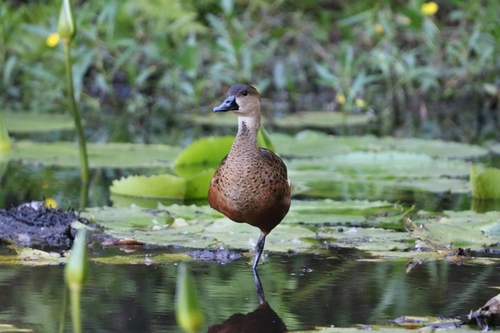
Wandering Whistling-Duck (Dendrocygna arcuata) Wandering Whistling-Duck
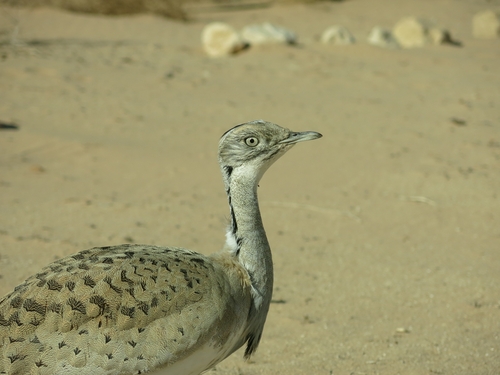
Asian Houbara (Chlamydotis macqueenii) Asian Houbara

Media

Loading…

In short

The Wandering Whistling-Duck and the Asian Houbara are distinct in appearance and behavior. The Wandering Whistling-Duck is a waterfowl with a distinctive whistling call, while the Asian Houbara is a terrestrial bird known for its elaborate courtship displays. Observing their habitat and behavior will help in distinguishing them.

Identification tips

Check habitat: Wetlands for Wandering Whistling-Duck, arid regions for Asian Houbara. Observe behavior: Flocking and swimming for the duck, solitary and terrestrial displays for the houbara. Listen for calls: Whistling for the duck, silence for the houbara.

Size

The Wandering Whistling-Duck is generally smaller and more compact compared to the larger and more elongated Asian Houbara.

Plumage

The Wandering Whistling-Duck has a predominantly brown plumage with a lighter face and neck, while the Asian Houbara features a more cryptic, sandy-brown coloration with intricate patterns that blend into arid environments.

Behaviour

The Wandering Whistling-Duck is often seen in flocks on water bodies, whereas the Asian Houbara is usually solitary or in small groups on dry land, performing elaborate displays during the breeding season.

Habitat

The Wandering Whistling-Duck is typically found in wetlands and freshwater lakes, while the Asian Houbara inhabits arid and semi-arid regions such as deserts and steppes.

Voice

The Wandering Whistling-Duck is known for its distinctive whistling calls, whereas the Asian Houbara is generally quieter and less vocal.

Submit a better description

Use the same sections as the comparison. Your text is published immediately.

The Wandering Whistling-Duck and the Asian Houbara are distinct in appearance and behavior. The Wandering Whistling-Duck is a waterfowl with a distinctive whistling call, while the Asian Houbara is a terrestrial bird known for its elaborate courtship displays. Observing their habitat and behavior will help in distinguishing them.

Check habitat: Wetlands for Wandering Whistling-Duck, arid regions for Asian Houbara. Observe behavior: Flocking and swimming for the duck, solitary and terrestrial displays for the houbara. Listen for calls: Whistling for the duck, silence for the houbara.

The Wandering Whistling-Duck is generally smaller and more compact compared to the larger and more elongated Asian Houbara.

The Wandering Whistling-Duck has a predominantly brown plumage with a lighter face and neck, while the Asian Houbara features a more cryptic, sandy-brown coloration with intricate patterns that blend into arid environments.

The Wandering Whistling-Duck is often seen in flocks on water bodies, whereas the Asian Houbara is usually solitary or in small groups on dry land, performing elaborate displays during the breeding season.

The Wandering Whistling-Duck is typically found in wetlands and freshwater lakes, while the Asian Houbara inhabits arid and semi-arid regions such as deserts and steppes.

The Wandering Whistling-Duck is known for its distinctive whistling calls, whereas the Asian Houbara is generally quieter and less vocal.

Discard your changes?

You have unsaved edits. If you leave now, those changes will be lost.

Wandering Whistling-Duck · Asian Houbara · My Tricky Birds