
Western House Martin vs Grey-necked Bunting
Delichon urbicum versus Emberiza buchanani
Play a quiz with Western House Martin and Grey-necked Bunting
 Western House Martin
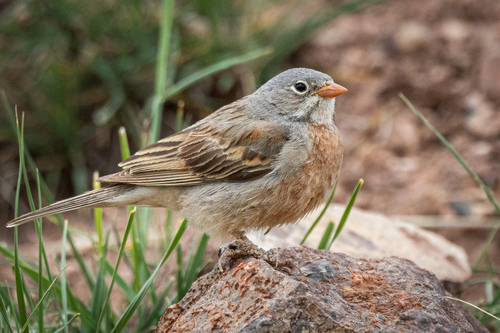 Grey-necked Bunting
In short
The Western House Martin and the Grey-necked Bunting are easily distinguished by their structure and plumage. The House Martin is a small, aerial swallow with a white rump and glossy blue-black upperparts, while the Grey-necked Bunting is a ground-dwelling bird with a more robust body and a distinctive grey neck.
Identification tips
Look for the white rump and glossy blue-black upperparts of the Western House Martin in flight. Observe the ground-dwelling behavior and grey neck of the Grey-necked Bunting. The House Martin's aerial habits contrast with the Bunting's terrestrial foraging.
Size
The Western House Martin is generally smaller and more slender compared to the larger, more robust Grey-necked Bunting.
Plumage
The Western House Martin has glossy blue-black upperparts with a white rump and underparts. In contrast, the Grey-necked Bunting features a grey neck, brownish body, and lacks the glossy sheen.
Behaviour
The Western House Martin is an aerial insectivore, often seen flying high in the sky. The Grey-necked Bunting is typically found on the ground or low vegetation, foraging for seeds.
Habitat
Western House Martins are often found near human settlements and open areas with water, while Grey-necked Buntings prefer dry, open habitats such as scrublands and grasslands.
Western House Martin · Grey-necked Bunting · My Tricky Birds