Birdr

Western Wood-Pewee vs Eastern Wood-Pewee

Contopus sordidulus versus Contopus virens

Play a quiz with Western Wood-Pewee and Eastern Wood-Pewee
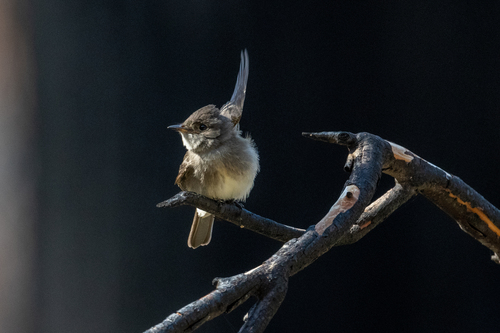
Western Wood-Pewee (Contopus sordidulus) Western Wood-Pewee
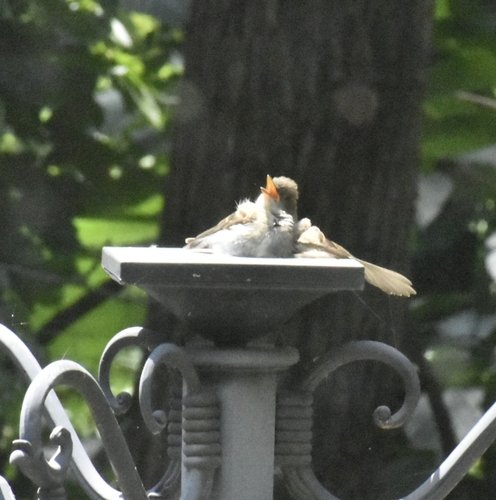
Eastern Wood-Pewee (Contopus virens) Eastern Wood-Pewee

Media

Loading…

In short

Western and Eastern Wood-Pewees are nearly identical in appearance, best distinguished by their vocalizations and breeding ranges. Both species are small, drab flycatchers with similar plumage, but their songs are distinct. They occupy different habitats during breeding, with limited range overlap.

Identification tips

Size

Both species are similar in size, typical of small flycatchers.

Plumage

Plumage is very similar: both have grayish-olive upperparts, pale underparts, and indistinct wingbars. Color is not a reliable differentiator.

Behaviour

Both species exhibit sit-and-wait foraging behavior, sallying from perches to catch insects.

Habitat

Western Wood-Pewee breeds in open woodlands and riparian areas in the West, while Eastern Wood-Pewee prefers deciduous and mixed forests in the East. Habitat choice reflects their breeding ranges.

Voice

Western Wood-Pewee has a distinctive, burry 'pee-wee' call, while the Eastern Wood-Pewee's call is a clear, whistled 'pee-a-wee'. Vocalizations are the most reliable way to distinguish them.

Submit a better description

Use the same sections as the comparison. Your text is published immediately.

Western and Eastern Wood-Pewees are nearly identical in appearance, best distinguished by their vocalizations and breeding ranges. Both species are small, drab flycatchers with similar plumage, but their songs are distinct. They occupy different habitats during breeding, with limited range overlap.

  • Listen for vocalizations: Western has a burry call, Eastern a clear whistle.
  • Check location: Western breeds in the western U.S., Eastern in the eastern U.S.
  • Consider habitat: Western prefers open woodlands, Eastern favors deciduous forests.
  • Plumage is not a reliable differentiator; focus on vocal and range differences.

Both species are similar in size, typical of small flycatchers.

Plumage is very similar: both have grayish-olive upperparts, pale underparts, and indistinct wingbars. Color is not a reliable differentiator.

Both species exhibit sit-and-wait foraging behavior, sallying from perches to catch insects.

Western Wood-Pewee breeds in open woodlands and riparian areas in the West, while Eastern Wood-Pewee prefers deciduous and mixed forests in the East. Habitat choice reflects their breeding ranges.

Western Wood-Pewee has a distinctive, burry 'pee-wee' call, while the Eastern Wood-Pewee's call is a clear, whistled 'pee-a-wee'. Vocalizations are the most reliable way to distinguish them.

Discard your changes?

You have unsaved edits. If you leave now, those changes will be lost.

Western Wood-Pewee · Eastern Wood-Pewee · My Tricky Birds