Birdr

White-faced Ibis vs Puna Ibis

Plegadis chihi versus Plegadis ridgwayi

Play a quiz with White-faced Ibis and Puna Ibis
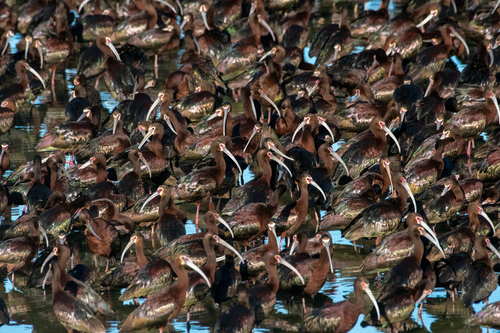
White-faced Ibis (Plegadis chihi) White-faced Ibis
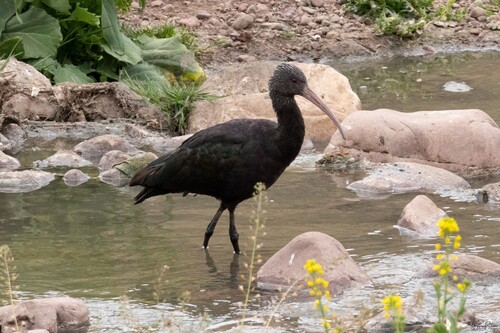
Puna Ibis (Plegadis ridgwayi) Puna Ibis

Media

Loading…

In short

The White-faced Ibis and Puna Ibis are similar in structure but differ in key plumage details and habitats. The White-faced Ibis has distinctive white facial feathers during the breeding season, while the Puna Ibis lacks this feature and has darker overall plumage.

Identification tips

Size

Both species are similar in size, typical of ibises, with no significant size difference noted.

Plumage

The White-faced Ibis has white feathers along the edge of its bare facial skin during the breeding season, while the Puna Ibis lacks these white facial feathers and has darker legs, iris, and body plumage.

Behaviour

Both species feed by probing in mud, but there are no notable behavioral differences highlighted.

Habitat

White-faced Ibis is found in freshwater wetlands in the western U.S. and winters in Mexico and parts of the southern U.S., while the Puna Ibis inhabits alpine wetlands and pasturelands in the Andes from Peru to Argentina.

Submit a better description

Use the same sections as the comparison. Your text is published immediately.

The White-faced Ibis and Puna Ibis are similar in structure but differ in key plumage details and habitats. The White-faced Ibis has distinctive white facial feathers during the breeding season, while the Puna Ibis lacks this feature and has darker overall plumage.

  • Breeding Season: Look for white facial feathers on the White-faced Ibis.
  • Leg and Iris Color: Puna Ibis has darker legs and iris.
  • Location: Consider the geographic range; White-faced Ibis is found in North America, while Puna Ibis is in the Andes.
  • Plumage Tone: Puna Ibis has darker overall plumage.

Both species are similar in size, typical of ibises, with no significant size difference noted.

The White-faced Ibis has white feathers along the edge of its bare facial skin during the breeding season, while the Puna Ibis lacks these white facial feathers and has darker legs, iris, and body plumage.

Both species feed by probing in mud, but there are no notable behavioral differences highlighted.

White-faced Ibis is found in freshwater wetlands in the western U.S. and winters in Mexico and parts of the southern U.S., while the Puna Ibis inhabits alpine wetlands and pasturelands in the Andes from Peru to Argentina.

Discard your changes?

You have unsaved edits. If you leave now, those changes will be lost.

White-faced Ibis · Puna Ibis · My Tricky Birds