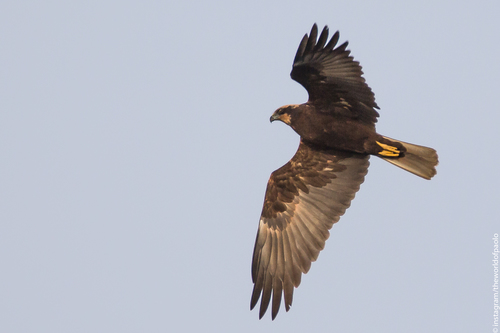
White-faced Whistling-Duck vs Western Marsh Harrier
Dendrocygna viduata versus Circus aeruginosus
Play a quiz with White-faced Whistling-Duck and Western Marsh Harrier
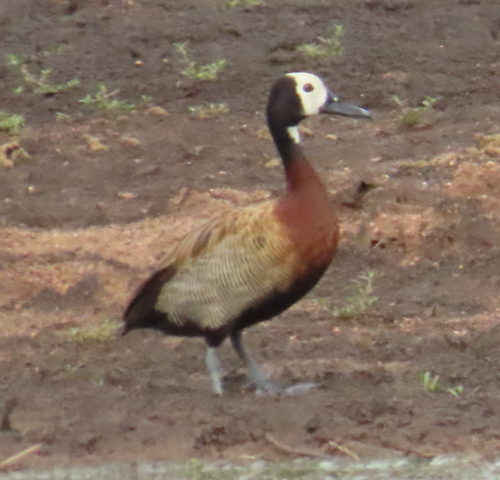
White-faced Whistling-Duck
Western Marsh Harrier
In short
The White-faced Whistling-Duck and the Western Marsh Harrier are easily distinguishable by their vastly different appearances and behaviors. The duck is a waterfowl with a distinctive white face and a whistling call, while the harrier is a raptor with a more varied plumage and a soaring flight pattern.
Identification tips
- Look for the white face and chestnut flanks of the White-faced Whistling-Duck. 2. Note the soaring flight and larger size of the Western Marsh Harrier. 3. Listen for the whistling calls of the duck, as the harrier is mostly silent. 4. Observe the habitat: ducks are in water, harriers are often above reed beds.
Size
The Western Marsh Harrier is significantly larger, with a wingspan that can exceed 1 meter, compared to the smaller, more compact White-faced Whistling-Duck.
Plumage
The White-faced Whistling-Duck has a striking white face, dark brown body, and chestnut flanks, while the Western Marsh Harrier has a more variable plumage, often with brown and buff tones and a less distinct facial pattern.
Behaviour
White-faced Whistling-Ducks are often seen in flocks, swimming or dabbling in water, whereas Western Marsh Harriers are solitary hunters, often seen soaring over wetlands.
Habitat
White-faced Whistling-Ducks are typically found in freshwater wetlands, ponds, and lakes. Western Marsh Harriers prefer reed beds and marshes but can also be seen over open fields.
Voice
The White-faced Whistling-Duck is known for its distinctive whistling calls, while the Western Marsh Harrier is generally silent, especially when compared to the duck.
White-faced Whistling-Duck · Western Marsh Harrier · My Tricky Birds