Birdr

White-winged Scoter vs Stejneger's Scoter

Melanitta deglandi versus Melanitta stejnegeri

Play a quiz with White-winged Scoter and Stejneger's Scoter
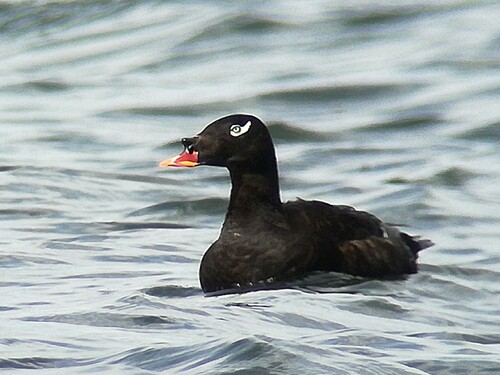
White-winged Scoter (Melanitta deglandi) White-winged Scoter
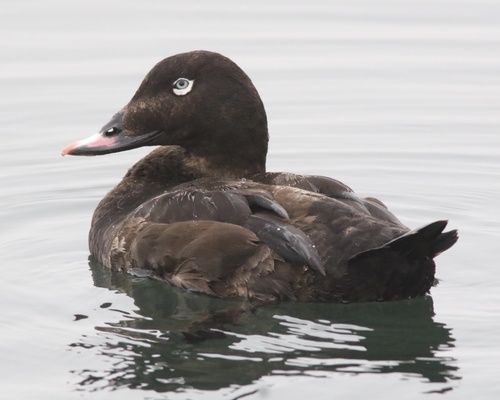
Stejneger's Scoter (Melanitta stejnegeri) Stejneger's Scoter

Media

Loading…

In short

White-winged Scoter and Stejneger's Scoter are similar sea ducks, but can be distinguished by their bill shape and plumage details. White-winged Scoter males have a distinctive white patch on the wings, visible in flight, while Stejneger's Scoter males have a more uniformly dark appearance.

Identification tips

1. Look for the white wing patch in flight for White-winged Scoter males. 2. Note the bill shape: White-winged Scoters have a more bulbous bill compared to Stejneger's. 3. Observe the eye markings: White-winged Scoter males have a white comma-shaped mark around the eye. 4. Consider the location: Stejneger's Scoter is more likely in the northern Pacific, while White-winged Scoter is found in North America.

Size

Both species are similar in size, with robust bodies typical of scoters.

Plumage

Adult male White-winged Scoters have a white patch on the wings and a white comma-shaped mark around the eye, whereas Stejneger's Scoters are more uniformly dark with less prominent white markings. Females of both species are more challenging to differentiate, generally appearing dark brown.

Behaviour

Both species dive for food and exhibit similar flight patterns, often flying low over water in lines.

Habitat

White-winged Scoters are found in coastal bays and inlets, while Stejneger's Scoters are more common in the northern Pacific region. Both prefer open water environments.

Voice

Vocalizations are not a reliable field mark for distinguishing these species, as both are generally quiet.

Submit a better description

Use the same sections as the comparison. Your text is published immediately.

White-winged Scoter and Stejneger's Scoter are similar sea ducks, but can be distinguished by their bill shape and plumage details. White-winged Scoter males have a distinctive white patch on the wings, visible in flight, while Stejneger's Scoter males have a more uniformly dark appearance.

1. Look for the white wing patch in flight for White-winged Scoter males. 2. Note the bill shape: White-winged Scoters have a more bulbous bill compared to Stejneger's. 3. Observe the eye markings: White-winged Scoter males have a white comma-shaped mark around the eye. 4. Consider the location: Stejneger's Scoter is more likely in the northern Pacific, while White-winged Scoter is found in North America.

Both species are similar in size, with robust bodies typical of scoters.

Adult male White-winged Scoters have a white patch on the wings and a white comma-shaped mark around the eye, whereas Stejneger's Scoters are more uniformly dark with less prominent white markings. Females of both species are more challenging to differentiate, generally appearing dark brown.

Both species dive for food and exhibit similar flight patterns, often flying low over water in lines.

White-winged Scoters are found in coastal bays and inlets, while Stejneger's Scoters are more common in the northern Pacific region. Both prefer open water environments.

Vocalizations are not a reliable field mark for distinguishing these species, as both are generally quiet.

Discard your changes?

You have unsaved edits. If you leave now, those changes will be lost.

White-winged Scoter · Stejneger's Scoter · My Tricky Birds