Birdr

Yellow-bellied Flycatcher vs Acadian Flycatcher

Empidonax flaviventris versus Empidonax virescens

Play a quiz with Yellow-bellied Flycatcher and Acadian Flycatcher
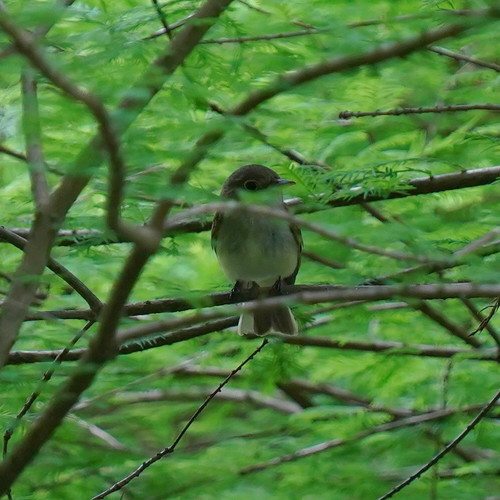
Yellow-bellied Flycatcher (Empidonax flaviventris) Yellow-bellied Flycatcher
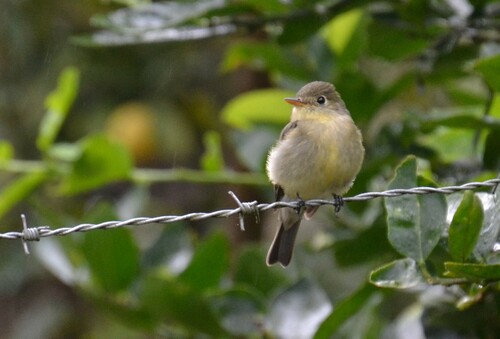
Acadian Flycatcher (Empidonax virescens) Acadian Flycatcher

Media

Loading…

In short

The Yellow-bellied Flycatcher and Acadian Flycatcher are both small, greenish Empidonax flycatchers, but they differ in habitat preference and subtle structural features. The Yellow-bellied Flycatcher is more associated with cooler, mossy coniferous forests, while the Acadian Flycatcher prefers mature deciduous forests often near water.

Identification tips

1. Habitat: Yellow-bellied Flycatchers are found in cooler, mossy coniferous areas; Acadian Flycatchers prefer deciduous forests near water. 2. Plumage: Look for the yellow wash on the belly of the Yellow-bellied Flycatcher. 3. Voice: Listen for the Acadian Flycatcher's explosive 'peet-sa' call. 4. Structure: Check for subtle differences in bill size and primary projection if visible.

Size

Both species are similar in size, typical of small Empidonax flycatchers.

Plumage

The Yellow-bellied Flycatcher has a more pronounced yellow wash on the belly and a slightly greener overall appearance compared to the Acadian Flycatcher, which tends to have a more olive tone.

Behaviour

Both species exhibit typical flycatcher behavior, sallying from perches to catch insects. The Yellow-bellied Flycatcher is known for its reclusive nature.

Habitat

Yellow-bellied Flycatchers are found in cool, moist coniferous or mixed forests, often in bogs and muskegs. Acadian Flycatchers prefer mature deciduous forests, frequently near water and sometimes in conifers in the Southeast.

Voice

The Acadian Flycatcher has a distinctive explosive 'peet-sa' call, while the Yellow-bellied Flycatcher's voice is softer and can be confused with other species.

Submit a better description

Use the same sections as the comparison. Your text is published immediately.

The Yellow-bellied Flycatcher and Acadian Flycatcher are both small, greenish Empidonax flycatchers, but they differ in habitat preference and subtle structural features. The Yellow-bellied Flycatcher is more associated with cooler, mossy coniferous forests, while the Acadian Flycatcher prefers mature deciduous forests often near water.

1. Habitat: Yellow-bellied Flycatchers are found in cooler, mossy coniferous areas; Acadian Flycatchers prefer deciduous forests near water. 2. Plumage: Look for the yellow wash on the belly of the Yellow-bellied Flycatcher. 3. Voice: Listen for the Acadian Flycatcher's explosive 'peet-sa' call. 4. Structure: Check for subtle differences in bill size and primary projection if visible.

Both species are similar in size, typical of small Empidonax flycatchers.

The Yellow-bellied Flycatcher has a more pronounced yellow wash on the belly and a slightly greener overall appearance compared to the Acadian Flycatcher, which tends to have a more olive tone.

Both species exhibit typical flycatcher behavior, sallying from perches to catch insects. The Yellow-bellied Flycatcher is known for its reclusive nature.

Yellow-bellied Flycatchers are found in cool, moist coniferous or mixed forests, often in bogs and muskegs. Acadian Flycatchers prefer mature deciduous forests, frequently near water and sometimes in conifers in the Southeast.

The Acadian Flycatcher has a distinctive explosive 'peet-sa' call, while the Yellow-bellied Flycatcher's voice is softer and can be confused with other species.

Discard your changes?

You have unsaved edits. If you leave now, those changes will be lost.

Yellow-bellied Flycatcher · Acadian Flycatcher · My Tricky Birds