
Andarríos Grande vs Andarríos Solitario
Tringa ochropus frente a Tringa solitaria
Juega un quiz con Andarríos Grande y Andarríos Solitario
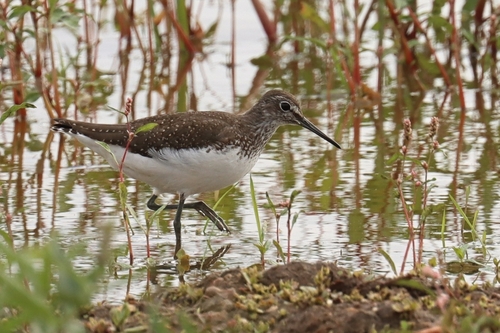 Andarríos Grande
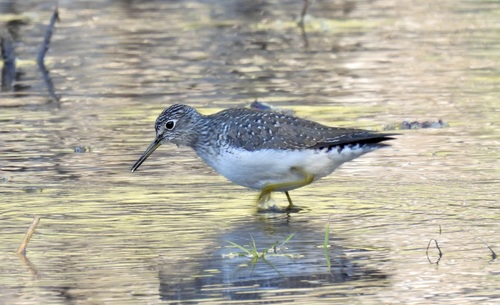 Andarríos Solitario
En breve
El Andarríos Grande y el Andarríos Solitario son similares en apariencia, pero se pueden distinguir por su comportamiento y preferencias de hábitat. El Andarríos Grande es más probable que se vea en Europa y Asia, mientras que el Andarríos Solitario se encuentra en América del Norte. Ambas especies tienen plumaje similar, pero su comportamiento solitario frente al comportamiento en bandada puede ser un diferenciador clave.
Consejos de identificación
1. Comportamiento: Busque comportamiento solitario en el Andarríos Solitario frente a la posible formación de bandadas en el Andarríos Grande. 2. Hábitat: Considere la ubicación geográfica: Andarríos Grande en Europa/Asia, Andarríos Solitario en América del Norte. 3. Anillo ocular: Verifique un anillo ocular blanco más pronunciado en el Andarríos Solitario.
Plumaje
Ambas especies tienen plumaje similar con partes superiores oscuras y partes inferiores más claras. Sin embargo, el Andarríos Solitario puede mostrar un anillo ocular blanco más pronunciado en comparación con el Andarríos Grande.
Comportamiento
El Andarríos Solitario es conocido por sus hábitos solitarios durante la migración, en contraste con el Andarríos Grande, que puede verse en pequeñas bandadas.
Hábitat
El Andarríos Grande se encuentra típicamente en Europa y Asia, mientras que el Andarríos Solitario cría en los bosques boreales de Canadá y Alaska y pasa el invierno en los trópicos de las Américas.