
Chevalier cul-blanc vs Chevalier solitaire
Tringa ochropus contre Tringa solitaria
Faire un quiz avec Chevalier cul-blanc et Chevalier solitaire
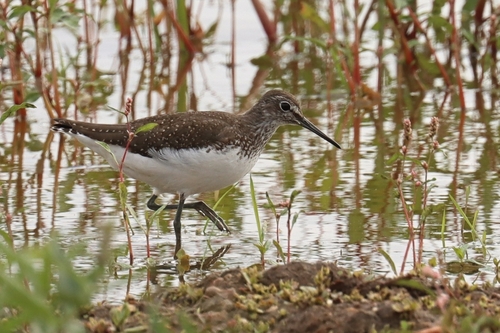 Chevalier cul-blanc
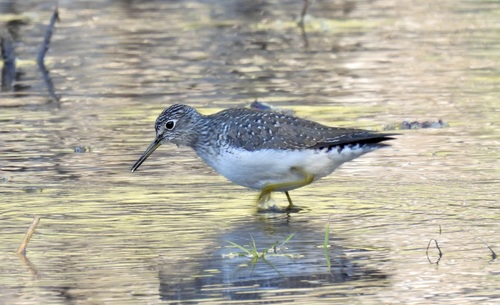 Chevalier solitaire
En bref
Le Chevalier cul-blanc et le Chevalier solitaire sont similaires en apparence mais peuvent être distingués par leur comportement et leurs préférences d'habitat. Le Chevalier cul-blanc est plus susceptible d'être vu en Europe et en Asie, tandis que le Chevalier solitaire se trouve en Amérique du Nord. Les deux espèces ont un plumage similaire, mais leurs comportements solitaires par rapport à ceux en groupe peuvent être un élément clé de différenciation.
Conseils d’identification
1. Comportement : Recherchez un comportement solitaire chez le Chevalier solitaire par rapport à un potentiel regroupement chez le Chevalier cul-blanc. 2. Habitat : Considérez la localisation géographique—Chevalier cul-blanc en Europe/Asie, Chevalier solitaire en Amérique du Nord. 3. Cercle oculaire : Vérifiez la présence d'un cercle oculaire blanc plus prononcé chez le Chevalier solitaire.
Plumage
Les deux espèces ont un plumage similaire avec des parties supérieures sombres et des parties inférieures plus claires. Cependant, le Chevalier solitaire peut présenter un cercle oculaire blanc plus prononcé par rapport au Chevalier cul-blanc.
Comportement
Le Chevalier solitaire est connu pour ses habitudes solitaires pendant la migration, contrastant avec le Chevalier cul-blanc, qui peut être vu en petits groupes.
Habitat
Le Chevalier cul-blanc se trouve généralement en Europe et en Asie, tandis que le Chevalier solitaire niche dans les forêts boréales du Canada et de l'Alaska et hiverne dans les tropiques des Amériques.
Chevalier cul-blanc · Chevalier solitaire · Mes oiseaux difficiles