Birdr

Green Sandpiper vs Solitary Sandpiper

Tringa ochropus versus Tringa solitaria

Play a quiz with Green Sandpiper and Solitary Sandpiper
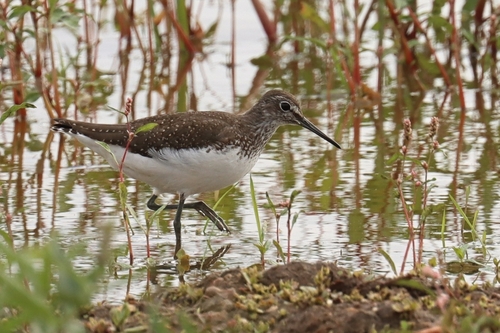
Green Sandpiper (Tringa ochropus) Green Sandpiper
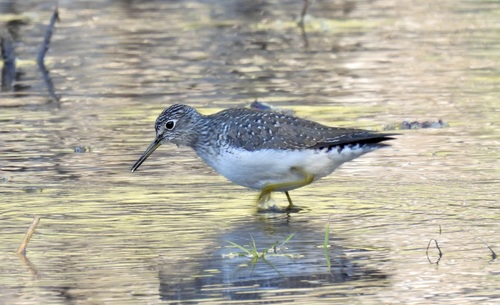
Solitary Sandpiper (Tringa solitaria) Solitary Sandpiper

Media

Loading…

In short

The Green Sandpiper and Solitary Sandpiper are similar in appearance but can be distinguished by their rump and tail patterns. The Green Sandpiper has a white rump and a more contrasting tail pattern, while the Solitary Sandpiper has a darker rump and less contrast in the tail. Both species are often found alone or in small groups, but their habitats and vocalizations can also help differentiate them.

Identification tips

Check the rump and tail pattern: Green Sandpiper has a white rump and contrasting tail, Solitary Sandpiper has a darker rump. Observe the habitat: Green Sandpiper in freshwater wetlands, Solitary Sandpiper in boreal forests or tropical regions. Listen for calls: Green Sandpiper's call is sharper, Solitary Sandpiper's is softer.

Size

Both species are similar in size, with the Solitary Sandpiper being slightly more slender.

Plumage

The Green Sandpiper has a white rump and a more contrasting black-and-white tail pattern. The Solitary Sandpiper has a darker rump and less contrast in the tail. Both have similar dark upperparts and white underparts.

Behaviour

Both species are often seen alone or in small groups. The Solitary Sandpiper is known for its habit of nesting in abandoned tree nests, unlike the Green Sandpiper.

Habitat

The Green Sandpiper is typically found in freshwater wetlands in the Palearctic region, while the Solitary Sandpiper breeds in boreal forests of North America and winters in tropical regions.

Voice

The Green Sandpiper's call is a distinctive 'twee-wee-wee', while the Solitary Sandpiper has a softer, more mellow call.

Submit a better description

Use the same sections as the comparison. Your text is published immediately.

The Green Sandpiper and Solitary Sandpiper are similar in appearance but can be distinguished by their rump and tail patterns. The Green Sandpiper has a white rump and a more contrasting tail pattern, while the Solitary Sandpiper has a darker rump and less contrast in the tail. Both species are often found alone or in small groups, but their habitats and vocalizations can also help differentiate them.

Check the rump and tail pattern: Green Sandpiper has a white rump and contrasting tail, Solitary Sandpiper has a darker rump. Observe the habitat: Green Sandpiper in freshwater wetlands, Solitary Sandpiper in boreal forests or tropical regions. Listen for calls: Green Sandpiper's call is sharper, Solitary Sandpiper's is softer.

Both species are similar in size, with the Solitary Sandpiper being slightly more slender.

The Green Sandpiper has a white rump and a more contrasting black-and-white tail pattern. The Solitary Sandpiper has a darker rump and less contrast in the tail. Both have similar dark upperparts and white underparts.

Both species are often seen alone or in small groups. The Solitary Sandpiper is known for its habit of nesting in abandoned tree nests, unlike the Green Sandpiper.

The Green Sandpiper is typically found in freshwater wetlands in the Palearctic region, while the Solitary Sandpiper breeds in boreal forests of North America and winters in tropical regions.

The Green Sandpiper's call is a distinctive 'twee-wee-wee', while the Solitary Sandpiper has a softer, more mellow call.

Discard your changes?

You have unsaved edits. If you leave now, those changes will be lost.

Green Sandpiper · Solitary Sandpiper · My Tricky Birds