
Zorzalito Carigrís vs Chingolo de Botteri
Catharus minimus frente a Peucaea botterii
Juega un quiz con Zorzalito Carigrís y Chingolo de Botteri
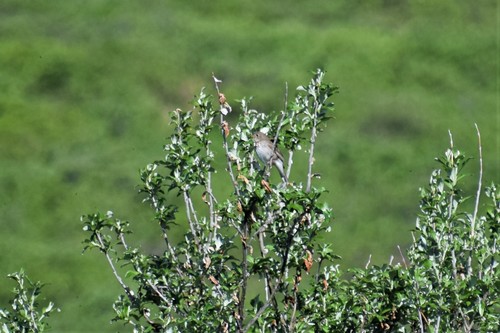 Zorzalito Carigrís
 Chingolo de Botteri
En breve
El Zorzalito Carigrís y el Chingolo de Botteri se distinguen fácilmente por su estructura y preferencias de hábitat. El zorzalito es un ave de tamaño mediano y esbelto con una postura más erguida, mientras que el chingolo es más pequeño, robusto y a menudo se ve merodeando por el suelo. Sus vocalizaciones también son distintas, con el canto del chingolo que se asemeja a una pelota de ping-pong que se detiene.
Consejos de identificación
1. Estructura: Busca la postura más erguida y la construcción esbelta del zorzalito en comparación con la forma más robusta del chingolo. 2. Hábitat: Nota el hábitat; los zorzales prefieren los bosques, los chingolos prefieren las praderas. 3. Canto: Escucha el canto distintivo del chingolo, que es diferente de las vocalizaciones típicas del zorzal.
Tamaño
El Zorzalito Carigrís es generalmente más grande y esbelto que el más pequeño y robusto Chingolo de Botteri.
Plumaje
El Zorzalito Carigrís tiene un plumaje más uniforme de color gris-marrón con una mejilla gris pálido, mientras que el Chingolo de Botteri tiene una apariencia más estriada típica de los chingolos.
Comportamiento
El Zorzalito Carigrís es más probable que se vea posado erguido, mientras que el Chingolo de Botteri a menudo exhibe un comportamiento evasivo en el suelo.
Hábitat
Los Zorzalitos Carigrís se encuentran típicamente en áreas boscosas, mientras que los Chingolos de Botteri están más asociados con praderas y hábitats abiertos.
Voz
El Chingolo de Botteri es conocido por su canto distintivo, que suena como una pelota de ping-pong que se detiene. El canto del Zorzalito Carigrís no se describe aquí.
Zorzalito Carigrís · Chingolo de Botteri · Mis aves difíciles