
Archibebe Fino vs Archibebe Patigualdo Grande
Tringa stagnatilis frente a Tringa melanoleuca
Juega un quiz con Archibebe Fino y Archibebe Patigualdo Grande
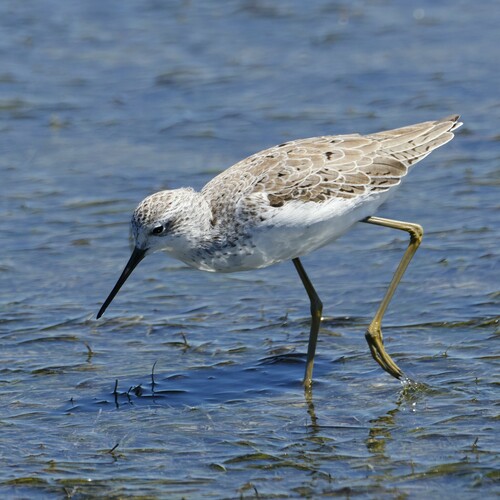 Archibebe Fino
 Archibebe Patigualdo Grande
En breve
El Archibebe Fino y el Archibebe Patigualdo Grande se pueden distinguir por su tamaño y forma del pico. El Archibebe Patigualdo Grande es más grande, con un pico más grueso y ligeramente curvado hacia arriba, mientras que el Archibebe Fino es más pequeño, con un pico delgado y recto. Ambas especies tienen patas de color amarillo brillante, pero el Archibebe Patigualdo Grande es más robusto y erguido en su postura.
Consejos de identificación
- Tamaño: El Archibebe Patigualdo Grande es más grande.
- Forma del pico: El Archibebe Patigualdo Grande tiene un pico más grueso y ligeramente curvado hacia arriba; el Archibebe Fino tiene un pico delgado y recto.
- Color de las patas: Ambas tienen patas de color amarillo brillante.
- Comportamiento: El Archibebe Patigualdo Grande es más solitario.
Tamaño
El Archibebe Patigualdo Grande es notablemente más grande que el Archibebe Fino.
Comportamiento
El Archibebe Patigualdo Grande es más solitario, a menudo se le ve solo o en pequeños grupos, mientras que el Archibebe Fino puede encontrarse en bandadas más grandes.
Hábitat
El Archibebe Patigualdo Grande cría en hábitats de pantano en el centro de Canadá y el sur de Alaska y pasa el invierno en humedales frescos y salinos a través de las Américas. Las preferencias de hábitat del Archibebe Fino no se detallan aquí.
Voz
El Archibebe Patigualdo Grande es conocido por sus agudos llamados de alarma, que son distintivos y a menudo se describen como 'reveladores' o 'llamadores'.
Archibebe Fino · Archibebe Patigualdo Grande · Mis aves difíciles