
Birdr

Marsh Sandpiper vs Greater Yellowlegs

Tringa stagnatilis versus Tringa melanoleuca

Play a quiz with Marsh Sandpiper and Greater Yellowlegs
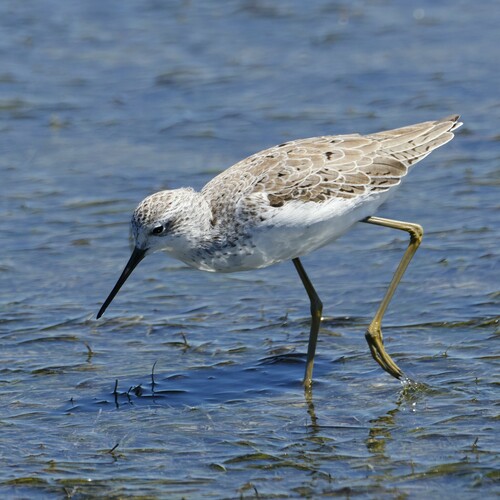
Marsh Sandpiper (Tringa stagnatilis) Marsh Sandpiper
Greater Yellowlegs (Tringa melanoleuca) Greater Yellowlegs

Media

Loading…

In short

The Marsh Sandpiper and Greater Yellowlegs can be distinguished by their size and structural differences. The Marsh Sandpiper is smaller with a more delicate build, while the Greater Yellowlegs is larger and more robust. Both species have yellow legs, but their calls and habitats can also help in identification.

Identification tips

  1. Size and Structure: Look for the smaller, more delicate Marsh Sandpiper versus the larger Greater Yellowlegs. 2. Bill Shape: The Marsh Sandpiper has a finer, straighter bill compared to the slightly upturned bill of the Greater Yellowlegs. 3. Leg Color: Both have yellow legs, so this is not a distinguishing feature. 4. Call: Listen for the Greater Yellowlegs' loud, piercing calls. 5. Habitat: Consider the location; Greater Yellowlegs are more common in the Americas, while Marsh Sandpipers are typically found in the Old World.

Size

The Marsh Sandpiper is smaller and more slender compared to the larger and more robust Greater Yellowlegs.

Plumage

Both species have similar coloration with grayish upperparts and white underparts, but the Marsh Sandpiper tends to have a more delicate appearance with a finer bill.

Behaviour

The Greater Yellowlegs is often more solitary and can be seen in small flocks during migration, while the Marsh Sandpiper may be found in larger groups.

Habitat

The Greater Yellowlegs breeds in swampy muskeg habitats in North America and winters in various wetland habitats across the Americas. The Marsh Sandpiper prefers freshwater wetlands and is more commonly found in the Old World.

Voice

The Greater Yellowlegs has a distinctive, piercing call often described as a 'telltale' or 'yelper,' while the Marsh Sandpiper's call is softer and less distinctive.

Submit a better description

Use the same sections as the comparison. Your text is published immediately.

The Marsh Sandpiper and Greater Yellowlegs can be distinguished by their size and structural differences. The Marsh Sandpiper is smaller with a more delicate build, while the Greater Yellowlegs is larger and more robust. Both species have yellow legs, but their calls and habitats can also help in identification.

  1. Size and Structure: Look for the smaller, more delicate Marsh Sandpiper versus the larger Greater Yellowlegs. 2. Bill Shape: The Marsh Sandpiper has a finer, straighter bill compared to the slightly upturned bill of the Greater Yellowlegs. 3. Leg Color: Both have yellow legs, so this is not a distinguishing feature. 4. Call: Listen for the Greater Yellowlegs' loud, piercing calls. 5. Habitat: Consider the location; Greater Yellowlegs are more common in the Americas, while Marsh Sandpipers are typically found in the Old World.

The Marsh Sandpiper is smaller and more slender compared to the larger and more robust Greater Yellowlegs.

Both species have similar coloration with grayish upperparts and white underparts, but the Marsh Sandpiper tends to have a more delicate appearance with a finer bill.

The Greater Yellowlegs is often more solitary and can be seen in small flocks during migration, while the Marsh Sandpiper may be found in larger groups.

The Greater Yellowlegs breeds in swampy muskeg habitats in North America and winters in various wetland habitats across the Americas. The Marsh Sandpiper prefers freshwater wetlands and is more commonly found in the Old World.

The Greater Yellowlegs has a distinctive, piercing call often described as a 'telltale' or 'yelper,' while the Marsh Sandpiper's call is softer and less distinctive.

Discard your changes?

You have unsaved edits. If you leave now, those changes will be lost.

Marsh Sandpiper · Greater Yellowlegs · My Tricky Birds