
Albastrello vs Greater Yellowlegs
Tringa stagnatilis contro Tringa melanoleuca
Fai un quiz con Albastrello e Greater Yellowlegs
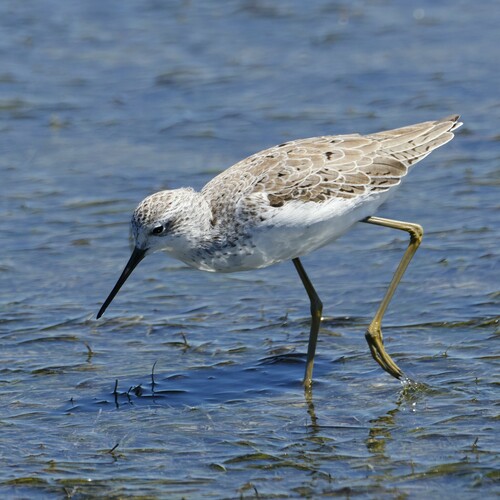 Albastrello
 Greater Yellowlegs
In breve
L'Albastrello e il Greater Yellowlegs possono essere distinti per la loro dimensione e forma del becco. Il Greater Yellowlegs è più grande con un becco più spesso e leggermente ricurvo, mentre l'Albastrello è più piccolo con un becco sottile e dritto. Entrambe le specie hanno zampe gialle brillanti, ma il Greater Yellowlegs è più robusto e in posizione eretta.
Consigli di identificazione
- Size: Greater Yellowlegs è più grande.
- Bill shape: Greater Yellowlegs ha un becco più spesso e leggermente ricurvo; Albastrello ha un becco sottile e dritto.
- Leg color: Entrambi hanno zampe gialle brillanti.
- Behavior: Greater Yellowlegs è più solitario.
Taglia
Il Greater Yellowlegs è visibilmente più grande dell'Albastrello.
Comportamento
Il Greater Yellowlegs è più solitario, spesso visto da solo o in piccoli gruppi, mentre l'Albastrello può essere trovato in gruppi più numerosi.
Habitat
Il Greater Yellowlegs nidifica in habitat paludosi di muschio nel Canada centrale e nell'Alaska meridionale e sverna in zone umide dolci e saline in tutto il continente americano. Le preferenze abitative dell'Albastrello non sono dettagliate qui.
Voce
Il Greater Yellowlegs è noto per i suoi allarmi penetranti, che sono distintivi e spesso descritti come 'telltale' o 'yelper.'