
Zampullín Picogrueso vs Anhinga Americana
Podilymbus podiceps frente a Anhinga anhinga
Juega un quiz con Zampullín Picogrueso y Anhinga Americana
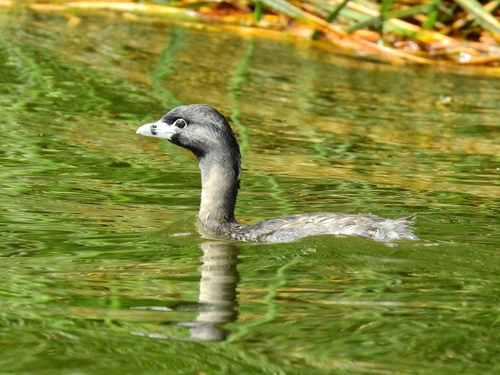 Zampullín Picogrueso
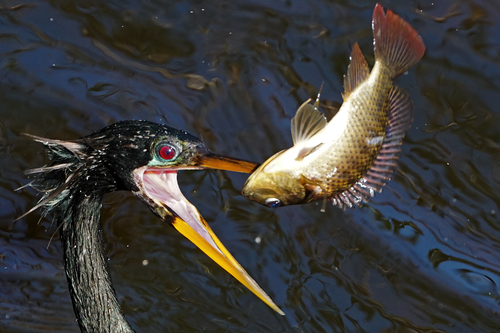 Anhinga Americana
En breve
El Zampullín Picogrueso y la Anhinga Americana Americana Americana son aves acuáticas, pero difieren significativamente en apariencia y comportamiento. El Zampullín Picogrueso es pequeño, con un pico distintivo corto, alto y arqueado, mientras que la Anhinga Americana Americana Americana es más grande, con un cuello largo y serpentino y un pico afilado para atrapar peces. La Anhinga Americana Americana Americana a menudo se ve con su cuerpo sumergido y solo su cuello visible, ganándose el apodo de 'ave serpiente'.
Consejos de identificación
Busca el pico: El Zampullín Picogrueso tiene un pico corto y arqueado con una barra vertical negra en la temporada de cría, mientras que la Anhinga Americana Americana Americana tiene un pico largo y afilado. Visibilidad del cuello: El largo cuello de la Anhinga Americana Americana Americana a menudo es visible sobre el agua, asemejándose a una serpiente. Comportamiento: Nota el comportamiento de secado de alas de la Anhinga Americana Americana Americana y la tendencia del Zampullín Picogrueso a zambullirse cuando se siente amenazado.
Tamaño
El Zampullín Picogrueso es más pequeño que la Anhinga Americana Americana Americana.
Plumaje
El Zampullín Picogrueso tiene plumaje marrón con un pico blanco azulado marcado por una barra negra vertical durante la temporada de cría. En contraste, la Anhinga Americana Americana Americana tiene plumaje húmedo que a menudo parece oscuro y está adaptado para la caza submarina.
Comportamiento
El Zampullín Picogrueso es reservado, a menudo zambulléndose para escapar del peligro, mientras que la Anhinga Americana Americana Americana utiliza su largo cuello para atrapar peces y se ve frecuentemente secando sus alas después de nadar.
Hábitat
El Zampullín Picogrueso habita en pantanos de agua dulce, lagos y ríos lentos, y en invierno, estuarios salobres. La Anhinga Americana Americana Americana prefiere vegetación acuática poco profunda donde puede cazar al acecho.
Voz
El Zampullín Picogrueso tiene un llamado de 'caow caow caow' que se escucha a larga distancia, mientras que las vocalizaciones de la Anhinga Americana Americana Americana no están anotadas en la información proporcionada.
Zampullín Picogrueso · Anhinga Americana · Mis aves difíciles