
mergulhão-caçador vs biguatinga
Podilymbus podiceps versus Anhinga anhinga
Jogue um quiz com mergulhão-caçador e biguatinga
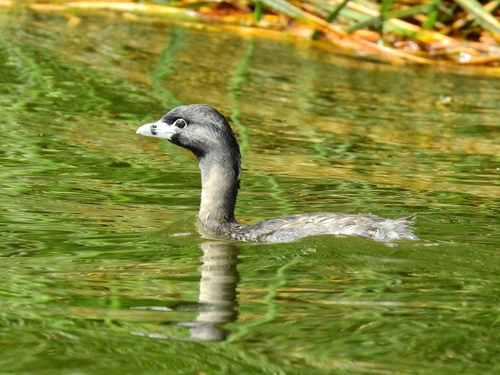 mergulhão-caçador
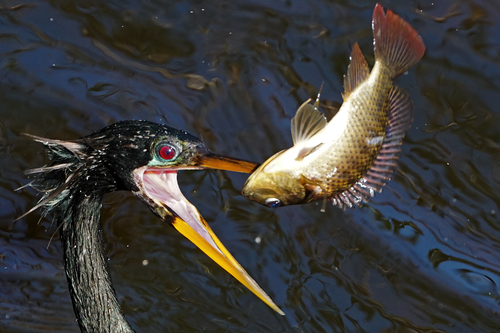 biguatinga
Em resumo
O mergulhão-caçador e a biguatinga são ambas aves aquáticas, mas diferem significativamente em aparência e comportamento. O mergulhão-caçador é pequeno, com um bico curto, alto e arqueado, enquanto a biguatinga é maior, com um pescoço longo e semelhante a uma cobra e um bico afiado para espetar peixes. A biguatinga é frequentemente vista com o corpo submerso e apenas o pescoço visível, ganhando o apelido de 'ave cobra'.
Dicas de identificação
Procure pelo bico: O mergulhão-caçador tem um bico curto e arqueado com uma barra vertical preta na época de reprodução, enquanto a biguatinga tem um bico longo e afiado. Visibilidade do pescoço: O longo pescoço da biguatinga é frequentemente visível acima da água, lembrando uma cobra. Comportamento: Note o comportamento de secagem das asas da biguatinga e a tendência do mergulhão-caçador de mergulhar quando ameaçado.
Tamanho
O mergulhão-caçador é menor que a biguatinga.
Plumagem
O mergulhão-caçador tem plumagem marrom com um bico branco azulado marcado por uma barra vertical preta durante a época de reprodução. Em contraste, a biguatinga tem plumagem que pode ser molhada, que frequentemente parece escura e é adaptada para a caça subaquática.
Comportamento
O mergulhão-caçador é discreto, frequentemente mergulhando para escapar do perigo, enquanto a biguatinga usa seu longo pescoço para espetar peixes e é frequentemente vista secando suas asas após nadar.
Habitat
O mergulhão-caçador habita pântanos de água doce, lagos e rios lentos, e no inverno, estuários salobros. A biguatinga prefere vegetação aquática rasa onde pode caçar à espreita.
Voz
O mergulhão-caçador tem um chamado distante de 'caow caow caow', enquanto as vocalizações da biguatinga não são mencionadas nas informações fornecidas.