
Pied-billed Grebe vs Anhinga
Podilymbus podiceps contro Anhinga anhinga
Fai un quiz con Pied-billed Grebe e Anhinga
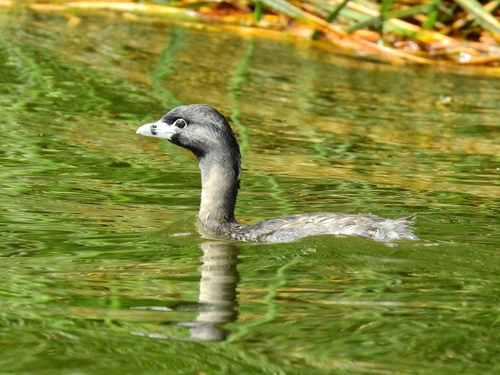 Pied-billed Grebe
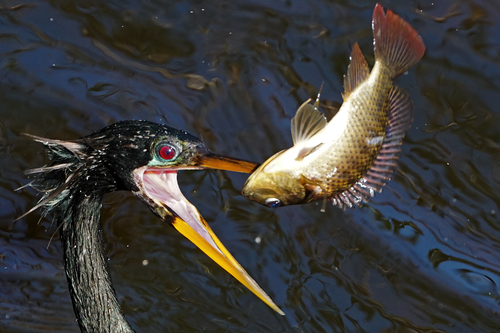 Anhinga
In breve
Il Pied-billed Grebe e l'Anhinga sono entrambi uccelli acquatici ma differiscono significativamente in aspetto e comportamento. Il Pied-billed Grebe è piccolo, con un becco distintivo corto, alto e arcuato, mentre l'Anhinga è più grande con un lungo collo simile a un serpente e un becco affilato per infilzare i pesci. L'Anhinga è spesso visto con il corpo sommerso e solo il collo visibile, guadagnandosi il soprannome di 'uccello serpente.'
Consigli di identificazione
Cerca il becco: Il Pied-billed Grebe ha un becco corto e arcuato con una barra verticale nera durante la stagione di nidificazione, mentre l'Anhinga ha un becco lungo e affilato. Visibilità del collo: Il lungo collo dell'Anhinga è spesso visibile sopra l'acqua, somigliando a un serpente. Comportamento: Nota il comportamento di asciugatura delle ali dell'Anhinga e la tendenza del Pied-billed Grebe a tuffarsi quando minacciato.
Taglia
Il Pied-billed Grebe è più piccolo dell'Anhinga.
Piumaggio
Il Pied-billed Grebe ha un piumaggio marrone con un becco bianco bluastro contrassegnato da una barra verticale nera durante la stagione di nidificazione. Al contrario, l'Anhinga ha un piumaggio bagnabile che appare spesso scuro ed è adattato per la caccia sott'acqua.
Comportamento
Il Pied-billed Grebe è riservato, spesso tuffandosi per sfuggire al pericolo, mentre l'Anhinga usa il suo lungo collo per infilzare i pesci ed è frequentemente visto ad asciugare le sue ali dopo aver nuotato.
Habitat
Il Pied-billed Grebe abita paludi d'acqua dolce, laghi e fiumi lenti, e in inverno, estuari salmastri. L'Anhinga preferisce la vegetazione acquatica poco profonda dove può cacciare a caccia.
Voce
Il Pied-billed Grebe ha un richiamo lontano 'caow caow caow', mentre le vocalizzazioni dell'Anhinga non sono annotate nelle informazioni fornite.