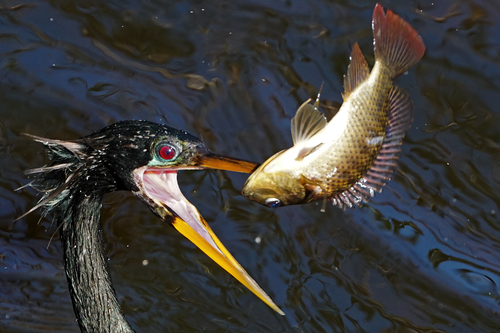
Pied-billed Grebe vs Anhinga
Podilymbus podiceps versus Anhinga anhinga
Play a quiz with Pied-billed Grebe and Anhinga
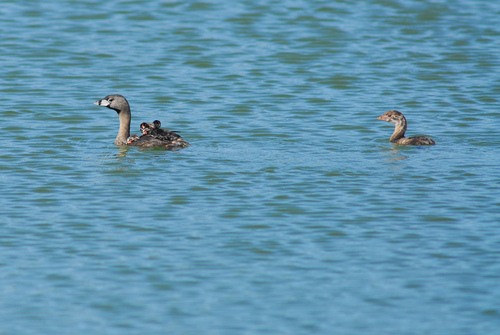
Pied-billed Grebe
Anhinga
In short
The Pied-billed Grebe and Anhinga are both aquatic birds but differ significantly in appearance and behavior. The Pied-billed Grebe is small and stocky with a distinctive short, arched bill, while the Anhinga is larger with a long, slender neck and pointed bill, often called a 'snake bird' due to its swimming posture.
Identification tips
- Bill shape: Look for the Pied-billed Grebe's short, arched bill versus the Anhinga's long, pointed bill.
- Neck visibility: Anhingas often have only their neck visible above water, resembling a snake.
- Plumage: Note the Pied-billed Grebe's breeding bill coloration and the Anhinga's glossy, dark plumage.
- Behavior: Observe the Pied-billed Grebe's diving escape tactics compared to the Anhinga's wing-drying behavior.
Size
The Pied-billed Grebe is much smaller and more compact compared to the larger, more elongated Anhinga.
Plumage
The Pied-billed Grebe has brown plumage with a unique bluish-white bill featuring a vertical black bar during breeding season. In contrast, the Anhinga has dark plumage with a glossy sheen and a long, snake-like neck that is often visible above water.
Behaviour
Pied-billed Grebes are secretive, often diving to escape danger, while Anhingas are more social, often seen drying their wings in the sun due to their wettable plumage.
Habitat
Both species inhabit freshwater environments, but the Pied-billed Grebe prefers marshes and lakes, while the Anhinga is often found in streams and ponds with nearby perching sites for sunning.
Voice
The Pied-billed Grebe has a distinctive 'caow caow caow' call, which is often heard before the bird is seen. Anhingas are generally quieter, with no specific call mentioned.