Birdr

Ibis mandore vs Ibis à face noire

Theristicus caudatus contre Theristicus melanopis

Faire un quiz avec Ibis mandore et Ibis à face noire
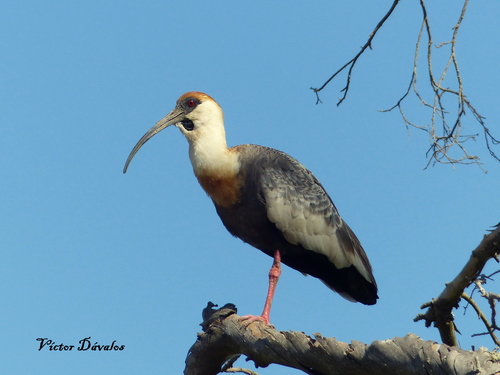
Ibis mandore (Theristicus caudatus) Ibis mandore
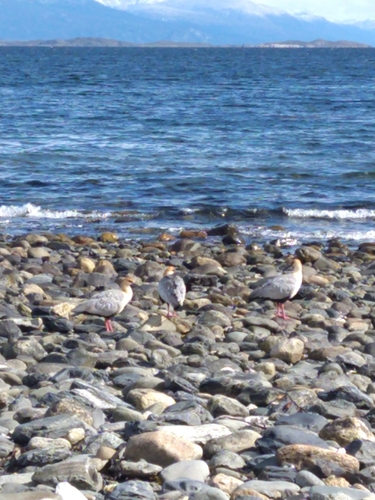
Ibis à face noire (Theristicus melanopis) Ibis à face noire

Médias

Chargement…

En bref

L'Ibis mandore se distingue par sa tête et son cou d'un brun clair éclatant, contrastant avec son dos gris et son ventre noir, tandis que l'Ibis à face noire a un corps grisâtre plus uniforme avec un visage noir distinctif. Les deux espèces appartiennent au même genre et partagent des caractéristiques structurelles similaires, mais leurs différences de plumage sont essentielles pour l'identification.

Conseils d’identification

Recherchez la tête et le cou d'un brun clair éclatant de l'Ibis mandore, qui sont absents chez l'Ibis à face noire. L'Ibis à face noire a un visage noir distinctif et un corps gris plus uniforme.

Plumage

L'Ibis mandore présente une tête et un cou d'un brun clair éclatant, un dos gris, des primaires et secondaires blanches, et un ventre noir. En revanche, l'Ibis à face noire a un corps grisâtre plus uniforme avec un visage noir distinctif.

Habitat

L'Ibis mandore se trouve souvent dans la savane, les terres de pâturage et les forêts ouvertes, fréquemment loin de l'eau. L'Ibis à face noire partage des habitats similaires mais est plus associé aux Andes.

Envoyer une meilleure description

Utilise les mêmes sections que la comparaison. Ton texte est publié tout de suite.

The Buff-necked Ibis is distinguished by its bright buffy head and neck, contrasting with its grey back and black underparts, while the Black-faced Ibis has a more uniform greyish body with a distinctive black face. Both species belong to the same genus and share similar structural features, but their plumage differences are key for identification.

Look for the bright buffy head and neck of the Buff-necked Ibis, which is absent in the Black-faced Ibis. The Black-faced Ibis has a distinctive black face and a more uniform grey body.

The Buff-necked Ibis features a bright buffy head and neck, grey back, white primaries and secondaries, and black underparts. In contrast, the Black-faced Ibis has a more uniform greyish body with a distinctive black face.

The Buff-necked Ibis is often found in savanna, ranchland, and open forest, frequently far from water. The Black-faced Ibis shares similar habitats but is more associated with the Andes.

Abandonner tes modifications ?

Tu as des modifications non enregistrées. Si tu pars maintenant, elles seront perdues.

Ibis mandore · Ibis à face noire · Mes oiseaux difficiles