
Ibis falcinelle vs Ibis à face blanche
Plegadis falcinellus contre Plegadis chihi
Faire un quiz avec Ibis falcinelle et Ibis à face blanche
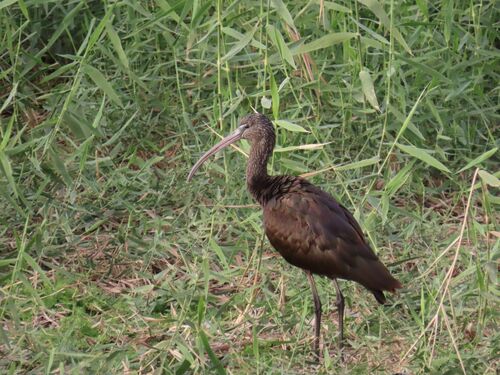 Ibis falcinelle
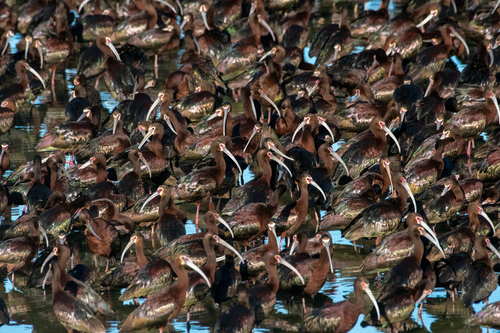 Ibis à face blanche
En bref
Le moyen le plus fiable de distinguer l'Ibis falcinelle et l'Ibis à face blanche est d'observer le plumage facial pendant la saison de reproduction. L'Ibis à face blanche a des plumes blanches distinctives le long du bord de sa peau faciale nue, ce qui manque à l'Ibis falcinelle. Les deux espèces sont similaires en structure et en coloration en dehors de cette période.
Conseils d’identification
- Saison de reproduction : Recherchez des plumes faciales blanches sur l'Ibis à face blanche.
- Localisation géographique : Dans l'est de l'Amérique du Nord, attendez-vous à voir l'Ibis falcinelle ; à l'ouest, recherchez l'Ibis à face blanche.
- Habitat : L'Ibis falcinelle peut être trouvé dans des habitats humides intérieurs plus variés, y compris les zones côtières.
Plumage
Pendant la saison de reproduction, l'Ibis à face blanche exhibe des plumes blanches distinctives le long du bord de sa peau faciale nue, une caractéristique absente chez l'Ibis falcinelle. Les deux espèces ont un plumage bronze métallique avec une teinte verte.
Habitat
L'Ibis falcinelle est plus répandu dans le monde et utilise une variété d'habitats humides intérieurs, ainsi que des lagunes côtières et des estuaires. En revanche, l'Ibis à face blanche se trouve principalement dans des zones humides d'eau douce dans l'ouest des États-Unis.
Ibis falcinelle · Ibis à face blanche · Mes oiseaux difficiles