Birdr

Glossy Ibis vs White-faced Ibis

Plegadis falcinellus versus Plegadis chihi

Play a quiz with Glossy Ibis and White-faced Ibis
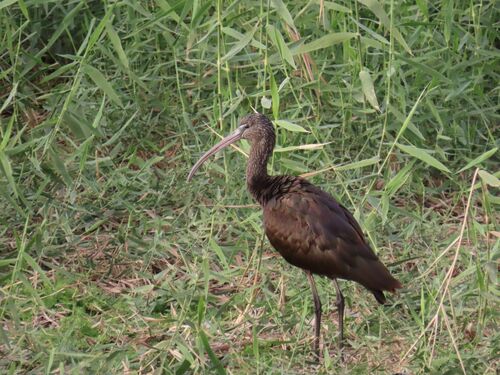
Glossy Ibis (Plegadis falcinellus) Glossy Ibis
White-faced Ibis (Plegadis chihi) White-faced Ibis

Media

Loading…

In short

The Glossy Ibis and White-faced Ibis are similar in structure, both having long, decurved bills and similar sizes. The most reliable field mark is the presence of white feathers along the facial skin of the White-faced Ibis during the breeding season, which the Glossy Ibis lacks. Outside of breeding, these species are more challenging to distinguish.

Identification tips

  1. Look for white facial feathers on the White-faced Ibis during the breeding season. 2. Note the geographical location: Glossy Ibis is more likely in the eastern US, while White-faced Ibis is common in the west. 3. Observe habitat preferences: both species prefer wetlands, but regional presence can help differentiate them.

Size

Both species are similar in size, typical of ibises with long legs and necks.

Plumage

The Glossy Ibis has a metallic bronze plumage with a green tinge. In contrast, the White-faced Ibis shows distinctive white feathers around the face during the breeding season, which is absent in the Glossy Ibis. Outside of breeding, plumage differences are subtle and less reliable.

Behaviour

Both species are gregarious and often found in flocks. They are tactile foragers, probing the substrate with their bills.

Habitat

Glossy Ibis is more widespread globally and in North America is found in the east, while the White-faced Ibis is more common in the western United States. Both prefer wetland habitats but can be found in a variety of wetland types.

Submit a better description

Use the same sections as the comparison. Your text is published immediately.

The Glossy Ibis and White-faced Ibis are similar in structure, both having long, decurved bills and similar sizes. The most reliable field mark is the presence of white feathers along the facial skin of the White-faced Ibis during the breeding season, which the Glossy Ibis lacks. Outside of breeding, these species are more challenging to distinguish.

  1. Look for white facial feathers on the White-faced Ibis during the breeding season. 2. Note the geographical location: Glossy Ibis is more likely in the eastern US, while White-faced Ibis is common in the west. 3. Observe habitat preferences: both species prefer wetlands, but regional presence can help differentiate them.

Both species are similar in size, typical of ibises with long legs and necks.

The Glossy Ibis has a metallic bronze plumage with a green tinge. In contrast, the White-faced Ibis shows distinctive white feathers around the face during the breeding season, which is absent in the Glossy Ibis. Outside of breeding, plumage differences are subtle and less reliable.

Both species are gregarious and often found in flocks. They are tactile foragers, probing the substrate with their bills.

Glossy Ibis is more widespread globally and in North America is found in the east, while the White-faced Ibis is more common in the western United States. Both prefer wetland habitats but can be found in a variety of wetland types.

Discard your changes?

You have unsaved edits. If you leave now, those changes will be lost.

Glossy Ibis · White-faced Ibis · My Tricky Birds