Birdr

Traquet motteux vs Ptilogon cendré

Oenanthe oenanthe contre Ptiliogonys cinereus

Faire un quiz avec Traquet motteux et Ptilogon cendré

Traquet motteux (Oenanthe oenanthe) Traquet motteux
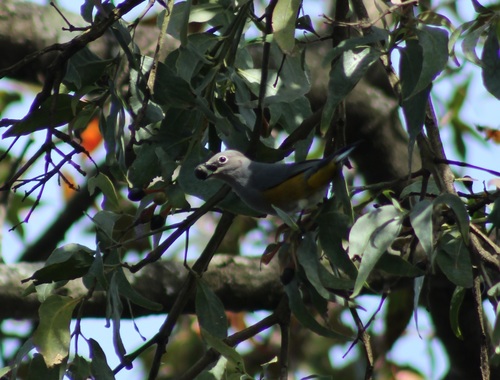
Ptilogon cendré (Ptiliogonys cinereus) Ptilogon cendré

Médias

Chargement…

En bref

Le Traquet motteux et le Ptilogon cendré diffèrent significativement en structure et en préférence d'habitat. Le Traquet est un petit passereau terrestre avec une posture droite distinctive, tandis que le Ptilogon est plus grand, avec un mode de vie plus arboricole. Ces différences sont essentielles pour les distinguer sur le terrain.

Conseils d’identification

1. Structure : Notez la posture droite du Traquet et son comportement terrestre par rapport aux habitudes arboricoles du Ptilogon. 2. Plumage : Recherchez le croupion blanc et le motif de queue noire du Traquet, qui sont absents chez le Ptilogon. 3. Habitat : Considérez l'habitat ; les Traquets se trouvent dans des zones ouvertes, tandis que les Ptilogons préfèrent les environnements boisés.

Taille

Le Ptilogon cendré est généralement plus grand que le Traquet motteux.

Plumage

Le Traquet motteux a généralement un plumage pâle avec un croupion blanc distinctif et un motif de queue noire, tandis que le Ptilogon cendré a une coloration grise plus uniforme avec une crête subtile.

Comportement

Les Traquets motteux sont souvent vus au sol, sautillant et volant bas, tandis que les Ptilogons cendrés sont plus arboricoles, souvent perchés dans des arbres ou effectuant de courts vols.

Habitat

Les Traquets motteux préfèrent les habitats ouverts, rocheux ou herbeux, tandis que les Ptilogons cendrés se trouvent plus couramment dans des zones boisées ou forestières.

Envoyer une meilleure description

Utilise les mêmes sections que la comparaison. Ton texte est publié tout de suite.

The Northern Wheatear and Grey Silky-flycatcher differ significantly in structure and habitat preference. The Wheatear is a small, ground-dwelling passerine with a distinctive upright posture, while the Silky-flycatcher is larger, with a more arboreal lifestyle. These differences are key in distinguishing them in the field.

1. Structure: Note the Wheatear's upright posture and ground-dwelling behavior compared to the Silky-flycatcher's arboreal habits. 2. Plumage: Look for the Wheatear's white rump and black tail pattern, which are absent in the Silky-flycatcher. 3. Habitat: Consider the habitat; Wheatears are in open areas, while Silky-flycatchers prefer wooded environments.

The Grey Silky-flycatcher is generally larger than the Northern Wheatear.

The Northern Wheatear typically has a pale plumage with a distinctive white rump and black tail pattern, whereas the Grey Silky-flycatcher has a more uniform grey coloration with a subtle crest.

Northern Wheatears are often seen on the ground, hopping and flitting low, while Grey Silky-flycatchers are more arboreal, often seen perched in trees or making short flights.

Northern Wheatears prefer open, rocky or grassy habitats, while Grey Silky-flycatchers are more commonly found in wooded or forested areas.

Abandonner tes modifications ?

Tu as des modifications non enregistrées. Si tu pars maintenant, elles seront perdues.

Traquet motteux · Ptilogon cendré · Mes oiseaux difficiles