
Goéland railleur vs Mouette atricille
Chroicocephalus genei contre Leucophaeus atricilla
Faire un quiz avec Goéland railleur et Mouette atricille
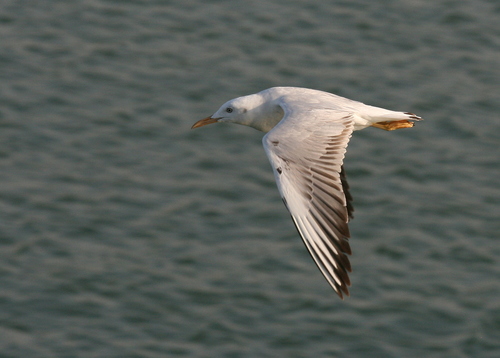 Goéland railleur
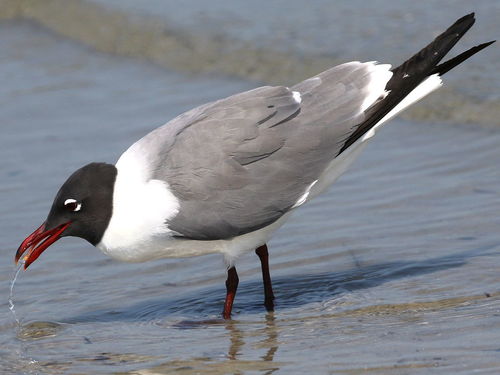 Mouette atricille
En bref
Le Goéland railleur et la Mouette atricille peuvent être distingués par la forme de leur bec et la coloration de leur tête. Le Goéland railleur a un bec remarquablement fin et allongé, tandis que la Mouette atricille arbore une capuche noire pendant la saison de reproduction. Ces caractéristiques sont essentielles lors de l'observation de ces espèces sur le terrain.
Conseils d’identification
- Recherchez le bec fin et allongé du Goéland railleur.
- Pendant la saison de reproduction, vérifiez la capuche noire sur la Mouette atricille.
- Observez les mantles gris foncé et les croissants oculaires blancs sur la Mouette atricille.
Plumage
La Mouette atricille a une capuche noire distinctive pendant la saison de reproduction, tandis que le Goéland railleur ne possède pas cette caractéristique. La Mouette atricille a également des mantles gris foncé et des croissants oculaires blancs étroits, qui ne sont pas présents chez le Goéland railleur.
Comportement
Les Mouettes atricilles sont connues pour leur vol léger et flottant et sont souvent vues autour des activités humaines, telles que les pique-niques et les bateaux de pêche. Le comportement du Goéland railleur n'est pas détaillé dans les notes.
Habitat
Les Mouettes atricilles se trouvent couramment le long des côtes atlantiques et du Golfe de l'Amérique du Nord, ainsi que dans les côtes caribéennes et pacifiques du Mexique. L'habitat du Goéland railleur n'est pas spécifié dans les notes.
Voix
La Mouette atricille est remarquée pour son cri chantant et rieur, qui est un son familier le long de ses habitats côtiers. Aucune information sur la vocalisation n'est fournie pour le Goéland railleur.
Goéland railleur · Mouette atricille · Mes oiseaux difficiles