
Gabbiano roseo vs Gabbiano sghignazzante
Chroicocephalus genei contro Leucophaeus atricilla
Fai un quiz con Gabbiano roseo e Gabbiano sghignazzante
 Gabbiano roseo
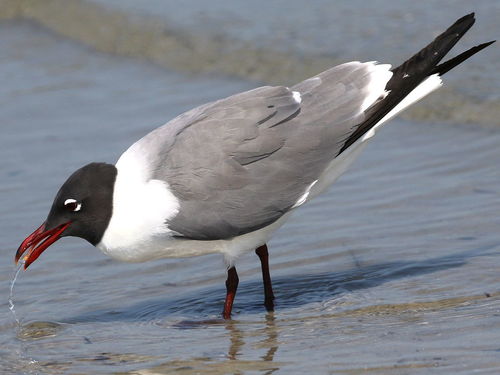 Gabbiano sghignazzante
In breve
Il Gabbiano roseo e il Gabbiano sghignazzante possono essere distinti dalla forma del becco e dalla colorazione della testa. Il Gabbiano roseo ha un becco notevolmente sottile ed allungato, mentre il Gabbiano sghignazzante presenta un cappuccio nero durante la stagione riproduttiva. Queste caratteristiche sono fondamentali quando si osservano queste specie sul campo.
Consigli di identificazione
- Cerca il becco sottile e allungato del Gabbiano roseo.
- Durante la stagione riproduttiva, controlla il cappuccio nero sul Gabbiano sghignazzante.
- Osserva i mantelli grigio scuro e i crescenti bianchi sugli occhi del Gabbiano sghignazzante.
Piumaggio
Il Gabbiano sghignazzante ha un distintivo cappuccio nero nella stagione riproduttiva, mentre il Gabbiano roseo non presenta questa caratteristica. Il Gabbiano sghignazzante ha anche mantelli grigio scuro e stretti crescenti bianchi sugli occhi, che non sono presenti nel Gabbiano roseo.
Comportamento
I Gabbiani sghignazzanti sono noti per il loro volo leggero e galleggiante e vengono spesso visti attorno ad attività umane, come picnic e barche da pesca. Il comportamento del Gabbiano roseo non è dettagliato nelle note.
Habitat
I Gabbiani sghignazzanti si trovano comunemente lungo le coste atlantiche e del Golfo del Nord America, così come nei Caraibi e lungo le coste pacifiche del Messico. L'habitat del Gabbiano roseo non è specificato nelle note.
Voce
Il Gabbiano sghignazzante è noto per il suo richiamo melodioso e sghignazzante, che è un suono familiare lungo i suoi habitat costieri. Non sono fornite informazioni sulla vocalizzazione del Gabbiano roseo.
Gabbiano roseo · Gabbiano sghignazzante · I miei uccelli difficili