
gaivota-de-bico-fino vs gaivota-alegre
Chroicocephalus genei versus Leucophaeus atricilla
Jogue um quiz com gaivota-de-bico-fino e gaivota-alegre
 gaivota-de-bico-fino
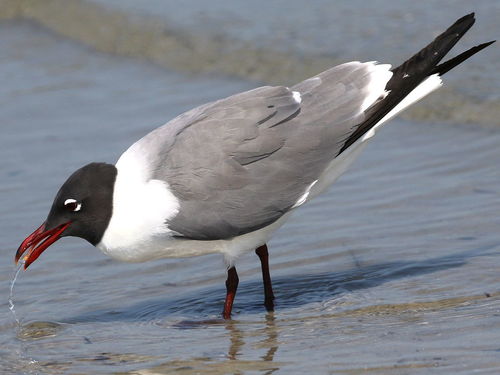 gaivota-alegre
Em resumo
A gaivota-de-bico-fino e a gaivota-alegre podem ser distinguidas pela forma do bico e pela coloração da cabeça. A gaivota-de-bico-fino possui um bico notavelmente fino e alongado, enquanto a gaivota-alegre exibe uma capuz preto durante a temporada de reprodução. Essas características são fundamentais ao observar essas espécies em campo.
Dicas de identificação
- Procure pelo bico fino e alongado da gaivota-de-bico-fino.
- Durante a temporada de reprodução, verifique o capuz preto na gaivota-alegre.
- Observe as mantas cinza-escuras e os crescentes oculares brancos na gaivota-alegre.
Plumagem
A gaivota-alegre possui um capuz preto distinto na temporada de reprodução, enquanto a gaivota-de-bico-fino não apresenta essa característica. A gaivota-alegre também possui mantas cinza-escuras e crescentes oculares brancos estreitos, que não estão presentes na gaivota-de-bico-fino.
Comportamento
As gaivotas-alegres são conhecidas por seu voo leve e flutuante e são frequentemente vistas em atividades humanas, como piqueniques e barcos de pesca. O comportamento da gaivota-de-bico-fino não está detalhado nas notas.
Habitat
As gaivotas-alegres são comumente encontradas ao longo das costas atlântica e do Golfo da América do Norte, bem como nas costas do Caribe e do Pacífico do México. O habitat da gaivota-de-bico-fino não está especificado nas notas.
Voz
A gaivota-alegre é conhecida por seu chamado melodioso e risonho, que é um som familiar ao longo de seus habitats costeiros. Não há informações sobre vocalização fornecidas para a gaivota-de-bico-fino.
gaivota-de-bico-fino · gaivota-alegre · Minhas aves difíceis