
Green-backed Hillstar vs White-crested Spadebill
Urochroa leucura contro Platyrinchus platyrhynchos
Fai un quiz con Green-backed Hillstar e White-crested Spadebill
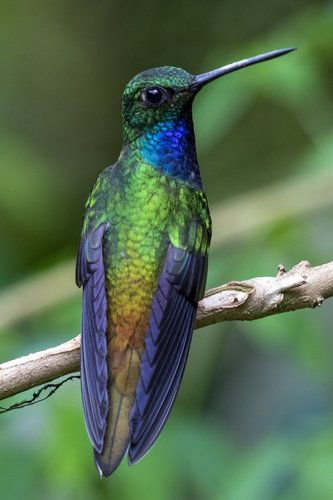 Green-backed Hillstar
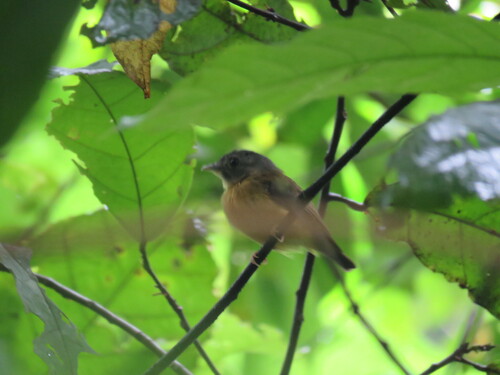 White-crested Spadebill
In breve
Il segno distintivo più affidabile per separare il Green-backed Hillstar dal White-crested Spadebill è la struttura complessiva: il hillstar è un colibrì snello e di dimensioni medie-grandi con un lungo becco dritto e una gola blu iridescente, mentre lo spadebill è un piccolo e rotondo uccello delle mosche con un enorme becco piatto e largo e una distintiva macchia bianca sulla corona (spesso nascosta). Le piume giovanili non creano confusione, poiché entrambe le specie sono simili agli adulti con solo lievi differenze. In volo o posato, la coda bordata di bianco del hillstar e le parti superiori verde bronzato contrastano nettamente con le parti superiori marrone ruggine e le parti inferiori ocra dello spadebill. L'habitat e il comportamento sono anche indizi forti: i hillstar si librano e si nutrono nei fiori, mentre gli spadebill si posano silenziosamente nel sottobosco della foresta e si lanciano per catturare insetti.
Consigli di identificazione
- La forma del becco è il controllo più veloce: Il Green-backed Hillstar ha un lungo becco dritto e snello tipico dei colibrì; il White-crested Spadebill ha un becco molto largo, piatto e a forma di pala con una mandibola superiore nera e una mandibola inferiore chiara. Questo è ovvio anche a distanza.
- Struttura del corpo: Il hillstar è snello, allungato e con una lunga coda; lo spadebill è compatto, rotondo e con una coda corta e una testa sproporzionatamente grande.
- Schema della coda: Il hillstar mostra piume esterne della coda bianche con piume centrali bronzate; la coda dello spadebill è uniformemente marrone scuro e corta.
- Colore delle parti superiori: Il hillstar è verde bronzato sopra; lo spadebill è marrone ruggine sopra.
- Gola e petto: Il hillstar ha una gola e un petto blu iridescenti; lo spadebill ha una gola bianca e parti inferiori ocra brillanti.
- Macchia sulla corona: Lo spadebill può mostrare una macchia bianca sulla corona parzialmente nascosta (più piccola nelle femmine), mai presente nel hillstar.
- Segni giovanili: I giovanili del hillstar hanno bordi color crema sulle piume della testa e un debole malar color crema, ma altrimenti somigliano agli adulti; i giovanili dello spadebill non sono descritti come diversi dagli adulti nei segni sul campo.
- Differenze sessuali: Entrambe le specie sono sessualmente simili, ma le femmine di hillstar sono più opache, e le femmine di spadebill hanno una macchia bianca sulla corona più piccola.
- Stile di volo: Il hillstar si libra e si muove rapidamente verso i fiori; lo spadebill si posa e compie brevi lanci diretti per catturare insetti.
- Habitat: Il hillstar si trova nelle foreste montane (principalmente sopra i 1.600 m); lo spadebill è uno specialista del sottobosco di pianura/foothill (principalmente sotto i 1.100 m).
- Comportamento di poso: Lo spadebill si siede silenziosamente, spesso in basso nel sottobosco; il hillstar è più probabile che venga visto nei fiori o posato brevemente tra i pasti.
- Voce: Il hillstar emette note alte e ripetute 'tseee' o 'twit'; le chiamate dello spadebill non sono descritte qui ma sono improbabili che siano simili.
- Colore delle gambe: Lo spadebill ha gambe e piedi giallo-rosati; il colore delle gambe del hillstar non è descritto ma non è un segno sul campo.
- Sovrapposizione dell'areale: Entrambi possono verificarsi in Colombia, Ecuador e Perù, ma raramente nello stesso microhabitat o elevazione.
- Trappole comuni: Viste distanti e retroilluminate possono oscurare la gola blu del hillstar o la macchia bianca sulla corona dello spadebill; fare affidamento sulla struttura e sulla forma del becco in scarsa illuminazione.
Taglia
Il White-crested Spadebill è leggermente più pesante (circa 12 g) rispetto al Green-backed Hillstar (circa 8,7 g), ma il hillstar è più lungo (13–14 cm contro 10,5–12 cm). Sul campo, il hillstar appare più allungato con un becco e una coda più lunghi, mentre lo spadebill è compatto, con coda corta e testa grande. Il becco dello spadebill è notevolmente largo e piatto, a differenza del becco snello e dritto del hillstar.
Piumaggio
-
Giovanili: I giovanili di entrambe le specie somigliano agli adulti. I giovanili del Green-backed Hillstar mostrano bordi color crema sulle piume della testa e un debole malar color crema, ma mantengono le parti superiori verde bronzato, la gola blu e la coda bordata di bianco. I giovanili dello spadebill non sono descritti in dettaglio, ma non ci sono evidenze che suggeriscano che differiscano notevolmente dagli adulti nei segni sul campo rilevanti per la confusione.
-
Adulti: Il Green-backed Hillstar ha parti superiori verde bronzato, una gola e un petto blu iridescenti, un ventre grigio opaco e una coda con piume centrali bronzate e piume esterne bianche bordate di grigio scuro. I sessi sono simili, con le femmine leggermente più opache. Gli adulti del White-crested Spadebill hanno parti superiori marrone ruggine, una testa grigia con una corona scura, una macchia bianca sulla corona parzialmente nascosta (più piccola nelle femmine), gola bianca e parti inferiori ocra brillanti. Le loro ali e coda sono marrone scuro. Il becco dello spadebill è notevolmente largo e piatto, con una mandibola superiore nera e una mandibola inferiore chiara.
-
Coda: La coda del hillstar è più lunga e mostra bianco con piume centrali bronzate; la coda dello spadebill è corta, marrone scuro e non mostra mai bianco.
Comportamento
Il Green-backed Hillstar è un colibrì attivo e in volo, solitamente si nutre nei fiori nei livelli inferiori e medi della foresta, a volte difendendo i territori di alimentazione. Può occasionalmente lanciarsi per catturare insetti. Al contrario, il White-crested Spadebill si posa silenziosamente nel sottobosco della foresta, compiendo brevi lanci per catturare insetti, ed è raramente visto nei fiori. I movimenti dello spadebill sono più deliberati e meno frenetici rispetto a quelli del hillstar. Durante la display, i maschi dello spadebill eseguono un volo delle ali fruscianti, ma questo è raramente visto.
Habitat
Il Green-backed Hillstar abita l'interno e i bordi delle foreste montane mature e delle foreste secondarie, e delle pendici cespugliose, principalmente a un'altitudine di 1.600–2.800 m (più bassa in Perù). Si trova tipicamente vicino ai corsi d'acqua sul versante orientale delle Ande in Colombia, Ecuador e NE Perù. Il White-crested Spadebill è una specie di pianura e foothill (dal livello del mare fino a 1.100 m), trovata nel sottobosco delle foreste umide di terra firme, specialmente su suoli sabbiosi, attraverso un ampio areale amazzonico e guianense. L'overlap è possibile solo nelle foreste di foothill di Colombia, Ecuador e Perù, ma il hillstar è una specie montana, mentre lo spadebill è un uccello del sottobosco di pianura/foothill.
Voce
Il Green-backed Hillstar emette una serie continua di note singole, alte 'tseee', 'tsing' o 'seeuw', e un 'twit' liquido ripetuto in lunghe sequenze. Le vocalizzazioni del White-crested Spadebill non sono descritte qui, ma come uccello delle mosche tiranno, le sue chiamate sono probabilmente brevi, acute e meno musicali rispetto a quelle del hillstar. Le vocalizzazioni non sono la separazione più affidabile sul campo a meno che non si sentano le note alte e ripetute del hillstar.
Green-backed Hillstar · White-crested Spadebill · I miei uccelli difficili