
Groenrugbergnimf vs Witkuifbreedbektiran
Urochroa leucura versus Platyrinchus platyrhynchos
Speel een quiz met Groenrugbergnimf en Witkuifbreedbektiran
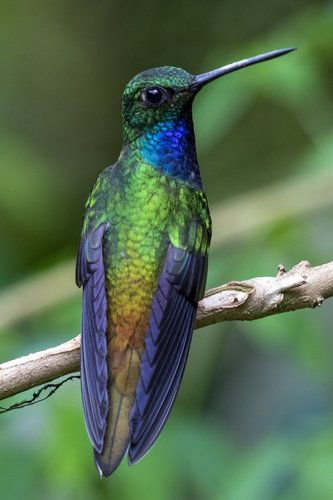 Groenrugbergnimf
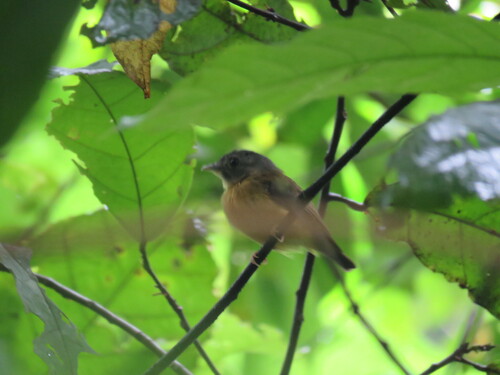 Witkuifbreedbektiran
Kort gezegd
Het meest betrouwbare veldkenmerk om Groenrugbergnimf van Witkuifbreedbektiran te scheiden is de algehele structuur: de bergnimf is een slanke, middelgrote kolibrie met een lange, rechte snavel en een iriserende blauwe keel, terwijl de breedbektiran een kleine, rondgebouwde vliegenvanger is met een enorme, platte, brede snavel en een kenmerkende witte kroonvlek (vaak verborgen). Juveniele verenkleed creëert geen verwarring, aangezien beide soorten op volwassenen lijken met slechts subtiele verschillen. In de vlucht of zittend, contrasteren de witrandige staart en bronzig-groene bovenzijde van de bergnimf scherp met de roestbruin bovenzijde en okerachtige onderzijde van de breedbektiran. Habitat en gedrag zijn ook sterke aanwijzingen: bergnimfen zweven en voeden zich bij bloemen, breedbektiran zitten stil in de bosondergroei en jagen op insecten.
Herkenningstips
- Snavelvorm is de snelste controle: Groenrugbergnimf heeft een lange, rechte, slanke snavel die typisch is voor kolibries; Witkuifbreedbektiran heeft een zeer brede, platte, peddelvormige snavel met een zwarte bovenkaak en een bleke onderkaak. Dit is zelfs van een afstand duidelijk.
- Lichaamsstructuur: Bergnimf is slank, langwerpig en langstaartig; breedbektiran is compact, rondgebouwd en kortstaartig met een onevenredig groot hoofd.
- Staartpatroon: Bergnimf toont witte buitenste staartveren met bronzige centrale veren; de staart van de breedbektiran is uniform donkerbruin en kort.
- Bovenzijde kleur: Bergnimf is bronzig-groen boven; breedbektiran is roestbruin boven.
- Keel en borst: Bergnimf heeft een iriserende blauwe keel en borst; breedbektiran heeft een witte keel en heldere okerachtige onderzijde.
- Kroonvlek: Breedbektiran kan een gedeeltelijk verborgen witte kroonvlek tonen (kleiner bij vrouwtjes), die nooit aanwezig is bij bergnimf.
- Juveniele kenmerken: Juveniele bergnimfen hebben buffy randen op de kopveren en een vage buffy malar, maar lijken verder op volwassenen; juveniele breedbektiran worden niet beschreven als verschillend van volwassenen in veldkenmerken.
- Geslachtsverschillen: Beide soorten zijn seksueel vergelijkbaar, maar vrouwelijke bergnimfen zijn doffer, en vrouwelijke breedbektiran hebben een kleinere witte kroonvlek.
- Vluchtstijl: Bergnimf zweeft en dartelt bij bloemen; breedbektiran zit en maakt korte, directe sprongetjes voor insecten.
- Habitat: Bergnimf wordt gevonden in montane bossen (meestal boven 1.600 m); breedbektiran is een laagland/voethill ondergroei specialist (meestal onder 1.100 m).
- Zitgedrag: Breedbektiran zit stil, vaak laag in de ondergroei; bergnimf is waarschijnlijker te zien bij bloemen of zittend tussen voedingen door.
- Stem: Bergnimf geeft hoge, herhaalde 'tseee' of 'twit' noten; de roep van de breedbektiran wordt hier niet beschreven maar zal waarschijnlijk niet vergelijkbaar zijn.
- Pootkleur: Breedbektiran heeft roze-gele poten en voeten; de pootkleur van de bergnimf wordt niet beschreven maar is geen veldkenmerk.
- Overlapping in verspreiding: Beide kunnen voorkomen in Colombia, Ecuador en Peru, maar zelden in dezelfde microhabitat of hoogte.
- Veelvoorkomende valkuilen: Distant, tegenlicht beelden kunnen de blauwe keel van de bergnimf of de witte kroonvlek van de breedbektiran verdoezelen; vertrouw op structuur en snavelvorm in slecht licht.
Grootte
Witkuifbreedbektiran is iets zwaarder (ongeveer 12 g) dan Groenrugbergnimf (ongeveer 8,7 g), maar de bergnimf is langer (13–14 cm vs. 10,5–12 cm). In het veld lijkt de bergnimf meer langwerpig met een langere snavel en staart, terwijl de breedbektiran compact, kortstaartig en groothoofdig is. De snavel van de breedbektiran is opvallend breed en plat, in tegenstelling tot de slanke, rechte snavel van de bergnimf.
Verenkleed
-
Juvenielen: De juvenielen van beide soorten lijken op volwassenen. Juveniele Groenrugbergnimf toont buffy randen op de kopveren en een vage buffy malar, maar behoudt de bronzig-groene bovenzijde, blauwe keel en witrandige staart. Juveniele breedbektiran worden niet in detail beschreven, maar er is geen bewijs dat ze aanzienlijk verschillen van volwassenen in veldkenmerken die relevant zijn voor verwarring.
-
Volwassenen: Groenrugbergnimf heeft bronzig-groene bovenzijde, een blauwe iriserende keel en borst, dof grijze buik, en een staart met bronzige centrale veren en witte buitenveren met een donkergrijze rand. De seksen zijn vergelijkbaar, met vrouwtjes iets doffer. Volwassen Witkuifbreedbektiran heeft roestbruin bovenzijde, een grijze kop met een donkere kroon, een gedeeltelijk verborgen witte kroonvlek (kleiner bij vrouwtjes), witte keel, en heldere okerachtige onderzijde. Hun vleugels en staart zijn donkerbruin. De snavel van de breedbektiran is opvallend breed en plat, met een zwarte bovenkaak en een bleke onderkaak.
-
Staart: De staart van de bergnimf is langer en toont wit met bronzige centrale veren; de staart van de breedbektiran is kort, donkerbruin, en toont nooit wit.
Gedrag
Groenrugbergnimf is een actieve, zwevende kolibrie, meestal voeden bij bloemen in de lagere en middelste boslagen, soms verdedigt het voedterritoria. Het kan af en toe jagen op insecten. In tegenstelling tot de Witkuifbreedbektiran, die stil zit in de bosondergroei, maakt korte sprongetjes om insecten te vangen, en zelden bij bloemen wordt gezien. De bewegingen van de breedbektiran zijn meer doordacht en minder frenetic dan die van de bergnimf. Tijdens de vertoning voeren mannelijke breedbektiran een zoemend vleugelvlucht uit, maar dit wordt zelden gezien.
Habitat
Groenrugbergnimf bewoont de binnenkant en randen van volwassen montane en secundaire bossen, en struikachtige hellingen, meestal op 1.600–2.800 m hoogte (lager in Peru). Het wordt typisch gevonden nabij beken op de oosthelling van de Andes in Colombia, Ecuador en NE Peru. Witkuifbreedbektiran is een laagland- en voethillsoort (zeeniveau tot 1.100 m), gevonden in de ondergroei van vochtige terra firme bossen, vooral op zandige bodems, over een breed Amazone- en Guiana-gebied. Overlap is alleen mogelijk in de voethillbossen van Colombia, Ecuador en Peru, maar de bergnimf is een montane soort, terwijl de breedbektiran een laagland/voethill ondergroei vogel is.
Geluid
Groenrugbergnimf geeft een continue reeks van enkele, hoge 'tseee', 'tsing', of 'seeuw' noten, en een vloeibare 'twit' herhaald in lange sequenties. De vocalisaties van de Witkuifbreedbektiran worden hier niet beschreven, maar als een tyrant vliegenvanger, zijn zijn roepen waarschijnlijk kort, scherp en minder muzikaal dan die van de bergnimf. Vocalisaties zijn niet de meest betrouwbare scheiding in het veld, tenzij de hoge, herhaalde noten van de bergnimf worden gehoord.
Groenrugbergnimf · Witkuifbreedbektiran · Mijn lastige vogels