Birdr

Black-banded Crake vs White-throated Crake

Rufirallus fasciatus versus Laterallus albigularis

Play a quiz with Black-banded Crake and White-throated Crake
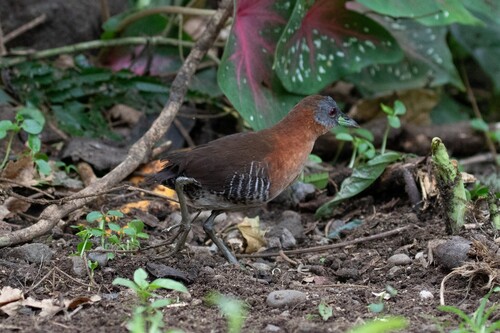
Black-banded Crake (Rufirallus fasciatus) Black-banded Crake
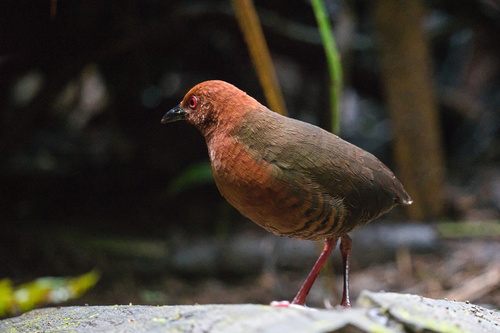
White-throated Crake (Laterallus albigularis) White-throated Crake

Media

Loading…

In short

The Black-banded Crake and White-throated Crake can be distinguished by their plumage and habitat preferences. The Black-banded Crake has a rufous head and underparts with broad black bars on the flanks and belly, while the White-throated Crake features a white throat and more uniform rufous-brown body. Both species are elusive, but their preferred habitats differ slightly.

Identification tips

Look for the broad black bars on the flanks and belly of the Black-banded Crake. Note the white throat of the White-throated Crake. Observe habitat: Black-banded prefers marshy areas near rivers, while White-throated favors dense forest undergrowth. Listen for vocalizations if possible, as White-throated Crake is more vocal.

Size

Both species are small crakes, with no significant size difference noted.

Plumage

The Black-banded Crake has a rufous head and underparts with distinctive broad black bars on the flanks and belly. In contrast, the White-throated Crake has a white throat and a more uniform rufous-brown body without the black barring.

Behaviour

Both species are secretive and often stay hidden in dense vegetation, making them difficult to observe directly.

Habitat

The Black-banded Crake is found in tall wet grass or marshy vegetation near rivers in upper Amazonia, while the White-throated Crake prefers dense, moist undergrowth in lowland forests and edges.

Voice

Vocalizations are not well-documented for the Black-banded Crake, whereas the White-throated Crake is known for its distinctive, repetitive calls.

Submit a better description

Use the same sections as the comparison. Your text is published immediately.

The Black-banded Crake and White-throated Crake can be distinguished by their plumage and habitat preferences. The Black-banded Crake has a rufous head and underparts with broad black bars on the flanks and belly, while the White-throated Crake features a white throat and more uniform rufous-brown body. Both species are elusive, but their preferred habitats differ slightly.

Look for the broad black bars on the flanks and belly of the Black-banded Crake. Note the white throat of the White-throated Crake. Observe habitat: Black-banded prefers marshy areas near rivers, while White-throated favors dense forest undergrowth. Listen for vocalizations if possible, as White-throated Crake is more vocal.

Both species are small crakes, with no significant size difference noted.

The Black-banded Crake has a rufous head and underparts with distinctive broad black bars on the flanks and belly. In contrast, the White-throated Crake has a white throat and a more uniform rufous-brown body without the black barring.

Both species are secretive and often stay hidden in dense vegetation, making them difficult to observe directly.

The Black-banded Crake is found in tall wet grass or marshy vegetation near rivers in upper Amazonia, while the White-throated Crake prefers dense, moist undergrowth in lowland forests and edges.

Vocalizations are not well-documented for the Black-banded Crake, whereas the White-throated Crake is known for its distinctive, repetitive calls.

Discard your changes?

You have unsaved edits. If you leave now, those changes will be lost.

Black-banded Crake · White-throated Crake · My Tricky Birds