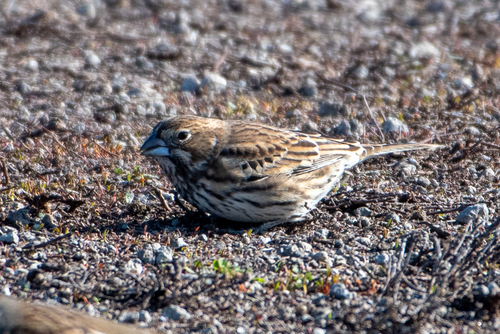
Black-throated Sparrow vs Lark Bunting
Amphispiza bilineata versus Calamospiza melanocorys
Play a quiz with Black-throated Sparrow and Lark Bunting
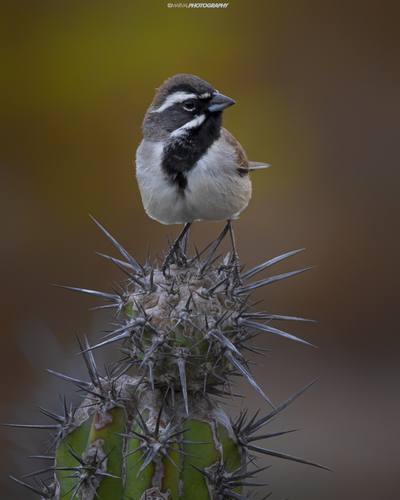
Black-throated Sparrow
Lark Bunting
In short
The Black-throated Sparrow and Lark Bunting can be distinguished by their distinct plumage and habitat preferences. The Black-throated Sparrow is noted for its striking black throat and facial markings, while the Lark Bunting males in breeding plumage are predominantly black with white wing patches. Habitat choice also differs, with the sparrow favoring arid regions and the bunting preferring grasslands.
Identification tips
- Look for the black throat and white facial markings of the Black-throated Sparrow. 2. In breeding season, identify male Lark Buntings by their black plumage and white wing patches. 3. Consider habitat: arid regions for Black-throated Sparrow, grasslands for Lark Bunting. 4. Listen for the Lark Bunting's flight song during display flights.
Size
Both species are similar in size, but the Lark Bunting is slightly larger and more robust.
Plumage
The Black-throated Sparrow has a distinctive black throat and white supercilium, with grayish-brown upperparts. In contrast, the male Lark Bunting in breeding plumage is mostly black with a prominent white wing patch, while females and non-breeding males are brown and streaked.
Behaviour
Black-throated Sparrows are often seen foraging low in desert shrubs, while Lark Buntings are more likely to be observed in flocks, especially outside the breeding season, foraging on the ground in open grasslands.
Habitat
Black-throated Sparrows inhabit arid and semi-arid regions with sparse vegetation, such as deserts and scrublands. Lark Buntings prefer open grasslands and are often found in areas with abundant grass cover.
Voice
The Black-throated Sparrow has a simple, melodic song, while the Lark Bunting is known for its complex flight songs, which are performed during aerial displays.