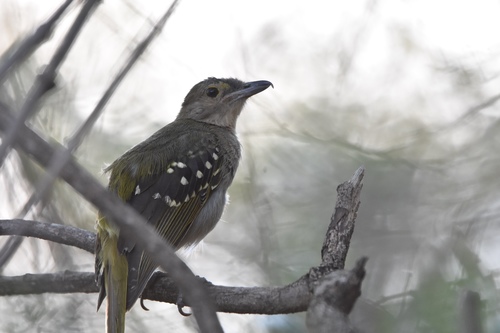
Botha's Lark vs Eastern Nicator
Spizocorys fringillaris versus Nicator gularis
Play a quiz with Botha's Lark and Eastern Nicator
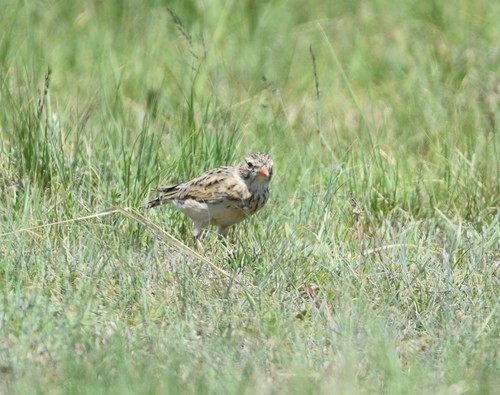
Botha's Lark
Eastern Nicator
In short
Botha's Lark and Eastern Nicator are easily distinguished by their size and habitat preferences. Botha's Lark is a small, ground-dwelling bird found in grasslands, while the Eastern Nicator is a larger, arboreal bird of dense forests. Observing their behavior and habitat is key to telling them apart.
Identification tips
- Size and Structure: Note the smaller size of Botha's Lark compared to the larger Eastern Nicator. 2. Habitat: Check the surrounding environment; Botha's Lark is in open grasslands, Eastern Nicator in dense forests. 3. Plumage: Look for the cryptic brown of Botha's Lark versus the green and yellow of the Eastern Nicator. 4. Behavior: Observe whether the bird is on the ground or in trees. 5. Vocalizations: Listen for the simple song of Botha's Lark versus the varied calls of the Eastern Nicator.
Size
Botha's Lark is significantly smaller than the Eastern Nicator.
Plumage
Botha's Lark has a more uniform, cryptic brown plumage suited for grasslands, whereas the Eastern Nicator has a striking combination of greenish upperparts and yellow underparts.
Behaviour
Botha's Lark is often seen on the ground, foraging in open grasslands, while the Eastern Nicator is more arboreal, often found in dense vegetation.
Habitat
Botha's Lark prefers open grasslands, while the Eastern Nicator inhabits dense forests and thickets.
Voice
Botha's Lark has a simple, repetitive song typical of larks, while the Eastern Nicator's vocalizations are more varied and melodious.