Birdr

Curlew Sandpiper vs Stilt Sandpiper

Calidris ferruginea versus Calidris himantopus

Play a quiz with Curlew Sandpiper and Stilt Sandpiper
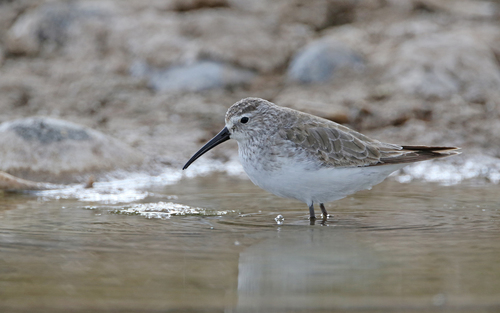
Curlew Sandpiper (Calidris ferruginea) Curlew Sandpiper
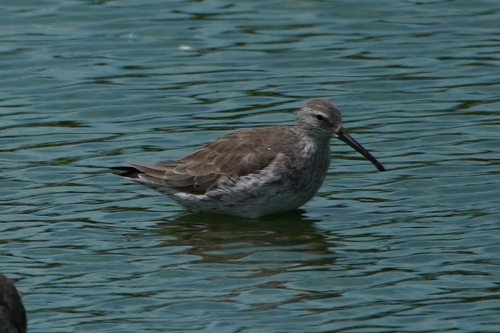
Stilt Sandpiper (Calidris himantopus) Stilt Sandpiper

Media

Loading…

In short

The Curlew Sandpiper and Stilt Sandpiper can be differentiated by their bill shape and foraging behavior. The Curlew Sandpiper has a longer, more decurved bill, while the Stilt Sandpiper's bill is straighter and slightly drooped at the tip. In the field, the Stilt Sandpiper often forages in deeper water compared to the Curlew Sandpiper.

Identification tips

  1. Look for the bill shape: Curlew Sandpiper has a longer, more decurved bill. 2. Observe the foraging behavior: Stilt Sandpiper often feeds in deeper water. 3. Check the plumage: In breeding season, Curlew Sandpipers have a rufous wash, while Stilt Sandpipers have barred underparts. 4. Consider the habitat: Curlew Sandpipers prefer mudflats, Stilt Sandpipers prefer freshwater pools.

Size

Both species are similar in size, but the Stilt Sandpiper may appear slightly larger due to its longer legs.

Plumage

In breeding plumage, the Curlew Sandpiper has a distinctive rufous wash on the underparts, while the Stilt Sandpiper shows more barred underparts. In non-breeding plumage, both species are grayish, but the Curlew Sandpiper tends to have a cleaner white underbelly.

Behaviour

The Stilt Sandpiper often forages in belly-deep water, using a sewing-machine-like motion, while the Curlew Sandpiper typically forages in shallower water or mudflats.

Habitat

Curlew Sandpipers are more commonly found on tidal mudflats, whereas Stilt Sandpipers prefer freshwater pools or lagoons.

Voice

Vocalizations are not a primary distinguishing feature in the field, as both species have similar calls.

Submit a better description

Use the same sections as the comparison. Your text is published immediately.

The Curlew Sandpiper and Stilt Sandpiper can be differentiated by their bill shape and foraging behavior. The Curlew Sandpiper has a longer, more decurved bill, while the Stilt Sandpiper's bill is straighter and slightly drooped at the tip. In the field, the Stilt Sandpiper often forages in deeper water compared to the Curlew Sandpiper.

  1. Look for the bill shape: Curlew Sandpiper has a longer, more decurved bill. 2. Observe the foraging behavior: Stilt Sandpiper often feeds in deeper water. 3. Check the plumage: In breeding season, Curlew Sandpipers have a rufous wash, while Stilt Sandpipers have barred underparts. 4. Consider the habitat: Curlew Sandpipers prefer mudflats, Stilt Sandpipers prefer freshwater pools.

Both species are similar in size, but the Stilt Sandpiper may appear slightly larger due to its longer legs.

In breeding plumage, the Curlew Sandpiper has a distinctive rufous wash on the underparts, while the Stilt Sandpiper shows more barred underparts. In non-breeding plumage, both species are grayish, but the Curlew Sandpiper tends to have a cleaner white underbelly.

The Stilt Sandpiper often forages in belly-deep water, using a sewing-machine-like motion, while the Curlew Sandpiper typically forages in shallower water or mudflats.

Curlew Sandpipers are more commonly found on tidal mudflats, whereas Stilt Sandpipers prefer freshwater pools or lagoons.

Vocalizations are not a primary distinguishing feature in the field, as both species have similar calls.

Discard your changes?

You have unsaved edits. If you leave now, those changes will be lost.

Curlew Sandpiper · Stilt Sandpiper · My Tricky Birds