
Eastern Bluebird vs Townsend's Solitaire
Sialia sialis versus Myadestes townsendi
Play a quiz with Eastern Bluebird and Townsend's Solitaire
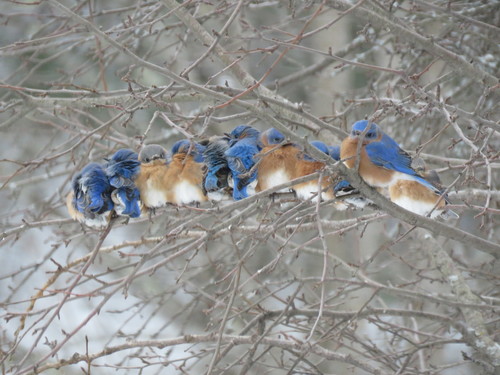 Eastern Bluebird
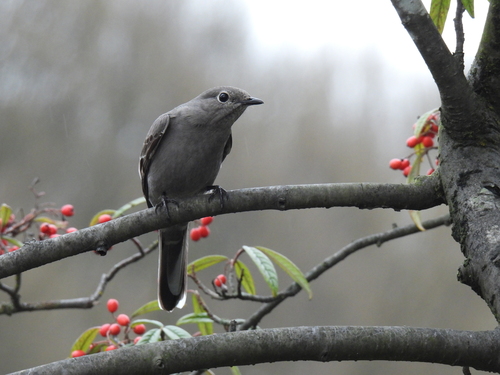 Townsend's Solitaire
In short
Eastern Bluebirds and Townsend's Solitaires can be distinguished by their plumage and habitat preferences. The Eastern Bluebird is known for its vibrant blue and orange plumage, while the Townsend's Solitaire sports a more subdued gray coloration with a white eye-ring. Habitat preferences also differ, with Eastern Bluebirds favoring open, human-modified areas and Townsend's Solitaires found in montane coniferous forests.
Identification tips
Plumage: Look for the bright blue and orange of the Eastern Bluebird versus the gray of the Townsend's Solitaire. Habitat: Consider the environment; Eastern Bluebirds are in open areas, Townsend's Solitaires in mountainous forests. Vocalization: Listen for the complex song of the Townsend's Solitaire, especially in winter.
Plumage
Eastern Bluebirds have striking blue plumage with orange on the breast, while Townsend's Solitaires are uniformly gray with a white eye-ring and subtle buff markings on the wings.
Behaviour
Eastern Bluebirds often perch in open areas to hunt insects, while Townsend's Solitaires are known for their territorial behavior in winter, defending patches of juniper trees.
Habitat
Eastern Bluebirds are commonly found in open, often disturbed habitats, whereas Townsend's Solitaires prefer montane coniferous forests and descend to lower elevations in winter.
Voice
Eastern Bluebirds have a varied repertoire of songs and calls, while Townsend's Solitaires are noted for their elaborate and beautiful song, often heard in fall and winter.