
Great Crested Flycatcher vs Painted Bunting
Myiarchus crinitus versus Passerina ciris
Play a quiz with Great Crested Flycatcher and Painted Bunting
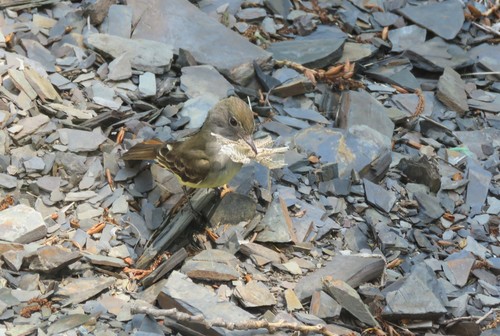 Great Crested Flycatcher
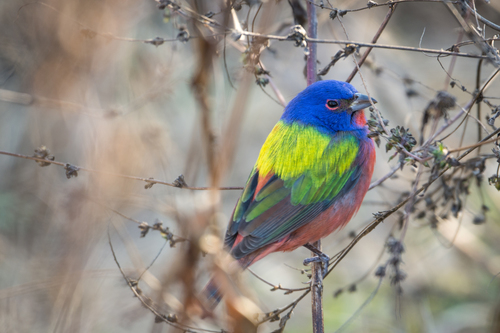 Painted Bunting
In short
The Great Crested Flycatcher and Painted Bunting are easily distinguished by their plumage: the flycatcher is predominantly brown and yellow, while the bunting is known for its vibrant colors, especially in males. They also differ significantly in habitat preference and behavior, with the flycatcher favoring wooded areas and the bunting often found in more open, shrubby environments.
Identification tips
Look for the Great Crested Flycatcher's brown and yellow plumage and crest in wooded areas. In contrast, search for the Painted Bunting's vibrant colors in open, shrubby habitats. The male Painted Bunting's bright colors are unmistakable, while females and immatures are greenish but still distinct from the flycatcher.
Plumage
The Great Crested Flycatcher has a brownish upper body with a pale yellow belly, and a distinctive crest. In contrast, the Painted Bunting, especially the male, is vividly colored with a blue head, red underparts, and green back. Female and immature Painted Buntings are more subdued, with greenish plumage, but still differ markedly from the flycatcher's coloration.
Habitat
Great Crested Flycatchers are typically found in wooded areas, while Painted Buntings prefer more open, shrubby habitats, often near water. This difference in habitat can be a useful clue when identifying these species.
Great Crested Flycatcher · Painted Bunting · My Tricky Birds