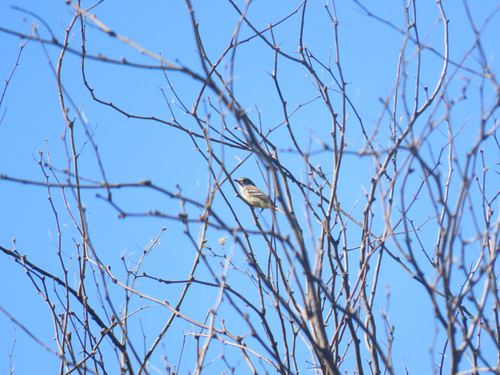
Hammond's Flycatcher vs Dusky Flycatcher
Empidonax hammondii versus Empidonax oberholseri
Play a quiz with Hammond's Flycatcher and Dusky Flycatcher
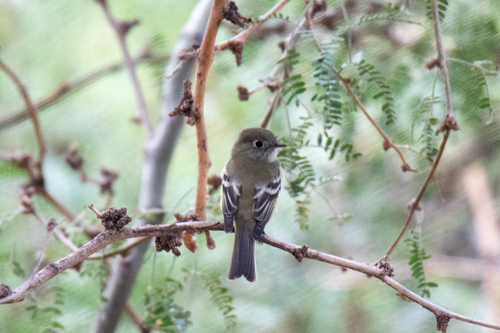
Hammond's Flycatcher
Dusky Flycatcher
In short
Hammond's and Dusky Flycatchers are notoriously difficult to distinguish in the field due to their subtle size and color differences. Key differences include Hammond's longer primary projection and shorter tail compared to Dusky. Vocalizations are similar but can be useful for identification with practice.
Identification tips
- Primary Projection: Look for Hammond's longer primary projection and shorter tail. 2. Habitat: Consider the habitat; Hammond's prefers older coniferous forests. 3. Vocalizations: With practice, subtle differences in calls can aid identification. 4. Behavior: Note foraging behavior; Hammond's may forage more from leaf surfaces early in the season.
Size
Hammond's Flycatcher has a slightly smaller and more compact appearance with a longer primary projection and shorter tail compared to the Dusky Flycatcher.
Plumage
Both species have similar plumage with olive-gray upperparts and pale underparts. Differences in plumage are subtle and not reliable for field identification.
Behaviour
Both species are primarily aerial foragers, capturing insects on the wing. Hammond's may forage more from leaf surfaces early in the breeding season, while Dusky occasionally pounces on prey on the ground or low shrubbery.
Habitat
Hammond's Flycatcher prefers mature, old-growth coniferous forests, while Dusky Flycatcher may benefit from forestry practices that thin dense coniferous stands or leave small openings.
Voice
The songs and calls of Hammond's and Dusky Flycatchers are similar, making vocal identification challenging without experience.