
Motmot

Least Tern vs Gull-billed Tern

Sternula antillarum versus Gelochelidon nilotica

Play a quiz with Least Tern and Gull-billed Tern

Least Tern (Sternula antillarum) Least Tern
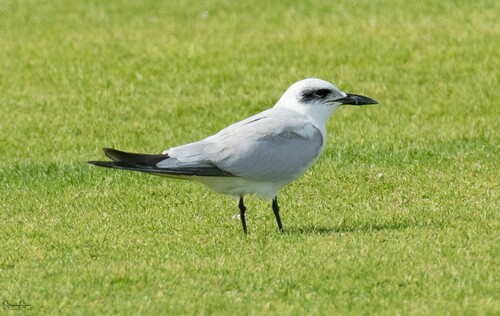
Gull-billed Tern (Gelochelidon nilotica) Gull-billed Tern

Media

Loading…

In short

The most reliable field mark to separate Least Tern from Gull-billed Tern is size and structure: Least Tern is much smaller and daintier, with a sharply pointed yellow bill (in breeding) and quick, buoyant flight, while Gull-billed Tern is large, thickset, with a short, strong black bill and broader wings. In flight, Least Tern shows a hunchbacked posture and fast, jerky wingbeats, whereas Gull-billed Tern is more powerful and gull-like. Plumage differences are subtle in adults but the bill color and shape, along with overall size and jizz, are decisive at any age. Immature and non-breeding birds can be tricky, but the structural differences remain clear.

Identification tips

  1. Size is the first check: Least Tern is tiny and delicate, Gull-billed Tern is large and robust. If the bird looks nearly as big as a small gull, it's not a Least Tern (applies all ages and seasons).
  2. Bill shape and color: Least Tern has a slender, sharply pointed bill—yellow with a black tip in breeding, dark in winter. Gull-billed Tern has a short, thick, strong bill that is always black in adults (all seasons). This is often the quickest field mark at any distance.
  3. Flight style: Least Tern is buoyant, with fast, jerky wingbeats and a hunchbacked posture, often holding the bill slightly downward. Gull-billed Tern is more direct, powerful, and gull-like, with broader wings and less bounce.
  4. Leg color: Least Tern has yellowish legs (breeding), while Gull-billed Tern's legs are black. This is visible when perched or at close range.
  5. Head pattern (breeding): Least Tern shows a black cap with a neat white forehead patch above the bill. Gull-billed Tern has a solid black cap with no white forehead in summer.
  6. Head pattern (non-breeding/immature): Least Tern's white forehead expands and the black cap becomes less defined. Gull-billed Tern loses the black cap, showing a dark patch through the eye, similar to Forster's Tern or Mediterranean Gull. Juveniles of both can be confusing, but structure and bill shape remain reliable.
  7. Upperwing pattern: Least Tern's wings are pale gray with conspicuous black on the outer primaries (all ages). Gull-billed Tern's upperwing is gray, but the black on the primaries is less contrasting and the overall wing is broader and less pointed.
  8. Tail and rump: Least Tern has gray rump and tail (not white), which helps separate it from some similar terns but not from Gull-billed Tern. Gull-billed Tern's tail is less deeply forked and the rump is not as distinctly marked.
  9. Habitat context: Least Tern prefers open sandy beaches and shallow coastal waters. Gull-billed Tern is more likely over marshes, fields, or even away from water, especially when foraging for insects.
  10. Feeding behavior: Least Tern plunge-dives for fish, often hovering before diving. Gull-billed Tern rarely plunge-dives, instead catching insects in flight or foraging on the ground.
  11. Voice: Least Tern gives a high, squeaky call; Gull-billed Tern has a deeper 'ker-wik.' Use this only if you are familiar with both calls.
  12. Mixed flocks: In areas where both species occur, size and bill shape will stand out immediately in direct comparison.
  13. Seasonal changes: In winter, both species lose the full black cap, but Least Tern's bill becomes all dark and the head pattern is less sharply defined, while Gull-billed Tern shows a dark eye patch. Structure and bill still separate them.
  14. Juvenile confusion: Juvenile Least Tern is still tiny and pointed-billed; juvenile Gull-billed Tern is large and thick-billed, with a faint mask but otherwise similar to winter adult.
  15. When in doubt: If you cannot judge size, focus on bill shape and color, then flight style. These are reliable at all ages and seasons.

Size

Least Tern is dramatically smaller: 22–24 cm length, 50 cm wingspan, and 39–52 g weight [wikipedia]. Gull-billed Tern is much larger and heavier: 33–42 cm length, 76–91 cm wingspan, and 150–292 g weight [wikipedia]. In the field, this means Gull-billed Tern looks almost twice as big and much bulkier, with longer wings and legs. The difference is obvious even at a distance or in mixed flocks.

Plumage

Juvenile and non-breeding birds are often confused, but structure and bill color help. Least Tern (all ages) shows pale gray upperparts, white underparts, and in breeding adults a black cap with a small white forehead patch; in winter, the white forehead expands and the black cap becomes less defined. The bill is yellow with a black tip in summer, turning dark in winter. The wings are pale gray with black outer primaries. Gull-billed Tern adults have gray upperparts, white underparts, a solid black cap in summer, and a strong black bill and legs. In winter, the black cap is lost, replaced by a dark eye patch. Juveniles resemble winter adults but with a fainter mask. Both species have white underparts, but Least Tern is paler above and has a smaller, more delicate look. The black on the outer primaries of Least Tern is more conspicuous than on Gull-billed Tern, but this is subtle compared to the size and bill differences.

Behaviour

Least Tern is agile and buoyant, with fast, jerky wingbeats and a distinctive hunchbacked flight posture, often hovering before shallow plunge-diving for fish. It usually forages over estuaries, lagoons, and nearshore waters. Gull-billed Tern is more powerful and gull-like in flight, with broader wings and a more direct, less buoyant flight style. It rarely plunge-dives, instead catching insects in flight or foraging over fields and marshes. Gull-billed Tern often appears more robust and less delicate in all behaviors.

Habitat

Least Tern breeds on open sandy beaches, estuaries, and lagoons, usually near shallow water in North America and locally in northern South America. It is rarely found far from water and prefers open, exposed ground for nesting. Gull-billed Tern is more versatile, breeding in scattered localities across Europe, Asia, Africa, and the Americas, often in coastal saltmarshes, lakes, and even wet fields. In North America, it is mostly coastal and associated with saltwater, but can be seen over a wider range of habitats, including inland marshes and agricultural areas.

Voice

Least Tern has a distinctive, squeaky call, higher-pitched and more rapid than Gull-billed Tern. Gull-billed Tern gives a characteristic 'ker-wik' call, which is deeper and less sharp. Voice is useful if you know both species well, but less reliable than structure and bill color for quick field separation.

Submit a better description

Use the same sections as the comparison. Your text is published immediately.

The most reliable field mark to separate Least Tern from Gull-billed Tern is size and structure: Least Tern is much smaller and daintier, with a sharply pointed yellow bill (in breeding) and quick, buoyant flight, while Gull-billed Tern is large, thickset, with a short, strong black bill and broader wings. In flight, Least Tern shows a hunchbacked posture and fast, jerky wingbeats, whereas Gull-billed Tern is more powerful and gull-like. Plumage differences are subtle in adults but the bill color and shape, along with overall size and jizz, are decisive at any age. Immature and non-breeding birds can be tricky, but the structural differences remain clear.

  1. Size is the first check: Least Tern is tiny and delicate, Gull-billed Tern is large and robust. If the bird looks nearly as big as a small gull, it's not a Least Tern (applies all ages and seasons).
  2. Bill shape and color: Least Tern has a slender, sharply pointed bill—yellow with a black tip in breeding, dark in winter. Gull-billed Tern has a short, thick, strong bill that is always black in adults (all seasons). This is often the quickest field mark at any distance.
  3. Flight style: Least Tern is buoyant, with fast, jerky wingbeats and a hunchbacked posture, often holding the bill slightly downward. Gull-billed Tern is more direct, powerful, and gull-like, with broader wings and less bounce.
  4. Leg color: Least Tern has yellowish legs (breeding), while Gull-billed Tern's legs are black. This is visible when perched or at close range.
  5. Head pattern (breeding): Least Tern shows a black cap with a neat white forehead patch above the bill. Gull-billed Tern has a solid black cap with no white forehead in summer.
  6. Head pattern (non-breeding/immature): Least Tern's white forehead expands and the black cap becomes less defined. Gull-billed Tern loses the black cap, showing a dark patch through the eye, similar to Forster's Tern or Mediterranean Gull. Juveniles of both can be confusing, but structure and bill shape remain reliable.
  7. Upperwing pattern: Least Tern's wings are pale gray with conspicuous black on the outer primaries (all ages). Gull-billed Tern's upperwing is gray, but the black on the primaries is less contrasting and the overall wing is broader and less pointed.
  8. Tail and rump: Least Tern has gray rump and tail (not white), which helps separate it from some similar terns but not from Gull-billed Tern. Gull-billed Tern's tail is less deeply forked and the rump is not as distinctly marked.
  9. Habitat context: Least Tern prefers open sandy beaches and shallow coastal waters. Gull-billed Tern is more likely over marshes, fields, or even away from water, especially when foraging for insects.
  10. Feeding behavior: Least Tern plunge-dives for fish, often hovering before diving. Gull-billed Tern rarely plunge-dives, instead catching insects in flight or foraging on the ground.
  11. Voice: Least Tern gives a high, squeaky call; Gull-billed Tern has a deeper 'ker-wik.' Use this only if you are familiar with both calls.
  12. Mixed flocks: In areas where both species occur, size and bill shape will stand out immediately in direct comparison.
  13. Seasonal changes: In winter, both species lose the full black cap, but Least Tern's bill becomes all dark and the head pattern is less sharply defined, while Gull-billed Tern shows a dark eye patch. Structure and bill still separate them.
  14. Juvenile confusion: Juvenile Least Tern is still tiny and pointed-billed; juvenile Gull-billed Tern is large and thick-billed, with a faint mask but otherwise similar to winter adult.
  15. When in doubt: If you cannot judge size, focus on bill shape and color, then flight style. These are reliable at all ages and seasons.

Least Tern is dramatically smaller: 22–24 cm length, 50 cm wingspan, and 39–52 g weight [wikipedia]. Gull-billed Tern is much larger and heavier: 33–42 cm length, 76–91 cm wingspan, and 150–292 g weight [wikipedia]. In the field, this means Gull-billed Tern looks almost twice as big and much bulkier, with longer wings and legs. The difference is obvious even at a distance or in mixed flocks.

Juvenile and non-breeding birds are often confused, but structure and bill color help. Least Tern (all ages) shows pale gray upperparts, white underparts, and in breeding adults a black cap with a small white forehead patch; in winter, the white forehead expands and the black cap becomes less defined. The bill is yellow with a black tip in summer, turning dark in winter. The wings are pale gray with black outer primaries. Gull-billed Tern adults have gray upperparts, white underparts, a solid black cap in summer, and a strong black bill and legs. In winter, the black cap is lost, replaced by a dark eye patch. Juveniles resemble winter adults but with a fainter mask. Both species have white underparts, but Least Tern is paler above and has a smaller, more delicate look. The black on the outer primaries of Least Tern is more conspicuous than on Gull-billed Tern, but this is subtle compared to the size and bill differences.

Least Tern is agile and buoyant, with fast, jerky wingbeats and a distinctive hunchbacked flight posture, often hovering before shallow plunge-diving for fish. It usually forages over estuaries, lagoons, and nearshore waters. Gull-billed Tern is more powerful and gull-like in flight, with broader wings and a more direct, less buoyant flight style. It rarely plunge-dives, instead catching insects in flight or foraging over fields and marshes. Gull-billed Tern often appears more robust and less delicate in all behaviors.

Least Tern breeds on open sandy beaches, estuaries, and lagoons, usually near shallow water in North America and locally in northern South America. It is rarely found far from water and prefers open, exposed ground for nesting. Gull-billed Tern is more versatile, breeding in scattered localities across Europe, Asia, Africa, and the Americas, often in coastal saltmarshes, lakes, and even wet fields. In North America, it is mostly coastal and associated with saltwater, but can be seen over a wider range of habitats, including inland marshes and agricultural areas.

Least Tern has a distinctive, squeaky call, higher-pitched and more rapid than Gull-billed Tern. Gull-billed Tern gives a characteristic 'ker-wik' call, which is deeper and less sharp. Voice is useful if you know both species well, but less reliable than structure and bill color for quick field separation.

Discard your changes?

You have unsaved edits. If you leave now, those changes will be lost.

Least Tern · Gull-billed Tern · My Tricky Birds