Birdr

Little Nightjar vs Ocellated Poorwill

Setopagis parvula versus Nyctiphrynus ocellatus

Play a quiz with Little Nightjar and Ocellated Poorwill
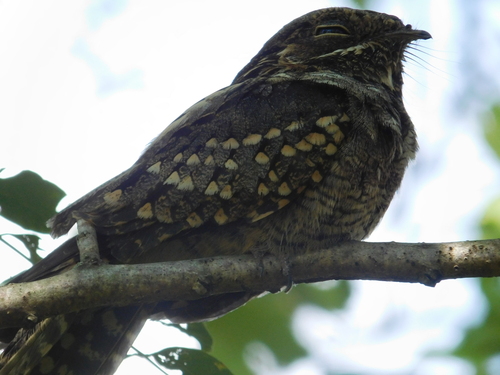
Little Nightjar (Setopagis parvula) Little Nightjar
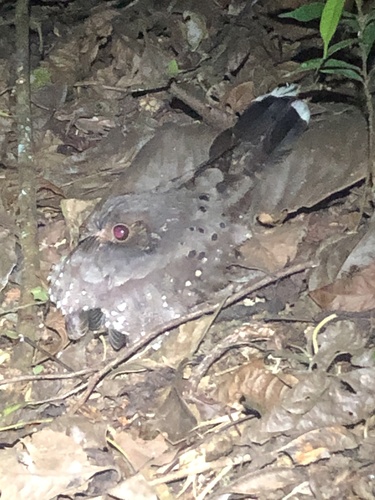
Ocellated Poorwill (Nyctiphrynus ocellatus) Ocellated Poorwill

Media

Loading…

In short

The Little Nightjar and Ocellated Poorwill can be distinguished by their plumage patterns and habitat preferences. The Little Nightjar has a distinctive white throat patch and white tips to its tail feathers, while the Ocellated Poorwill features prominent ocelli (eye-like spots) on its wings. Both species are part of the nightjar family but occupy different regions and habitats in South America.

Identification tips

  1. Look for the white throat patch and white tail tips on the Little Nightjar. 2. Check for ocelli on the wings for the Ocellated Poorwill. 3. Consider habitat: Little Nightjar prefers open woodlands in lowland regions. 4. Use vocalizations if known, as they can be distinctive between nightjar species.

Size

Both species are similar in size, typical of small nightjars, but specific measurements are not detailed.

Plumage

The Little Nightjar is generally grayish-brown with a broad tawny collar across the hindneck, a white throat patch, and white tips to all but the central rectrices. In contrast, the Ocellated Poorwill is noted for its ocelli on the wings, which are absent in the Little Nightjar.

Behaviour

Both species are nocturnal and exhibit typical nightjar behavior, such as ground nesting and aerial insect hunting.

Habitat

The Little Nightjar inhabits open woodland in the lowlands of central and eastern South America, from eastern Peru to northern Brazil, and south to northern Argentina. The Ocellated Poorwill's habitat preferences are less detailed but are generally within similar tropical and subtropical regions.

Voice

Vocalizations are not detailed in the provided notes, and further research is needed for accurate comparison.

Submit a better description

Use the same sections as the comparison. Your text is published immediately.

The Little Nightjar and Ocellated Poorwill can be distinguished by their plumage patterns and habitat preferences. The Little Nightjar has a distinctive white throat patch and white tips to its tail feathers, while the Ocellated Poorwill features prominent ocelli (eye-like spots) on its wings. Both species are part of the nightjar family but occupy different regions and habitats in South America.

  1. Look for the white throat patch and white tail tips on the Little Nightjar. 2. Check for ocelli on the wings for the Ocellated Poorwill. 3. Consider habitat: Little Nightjar prefers open woodlands in lowland regions. 4. Use vocalizations if known, as they can be distinctive between nightjar species.

Both species are similar in size, typical of small nightjars, but specific measurements are not detailed.

The Little Nightjar is generally grayish-brown with a broad tawny collar across the hindneck, a white throat patch, and white tips to all but the central rectrices. In contrast, the Ocellated Poorwill is noted for its ocelli on the wings, which are absent in the Little Nightjar.

Both species are nocturnal and exhibit typical nightjar behavior, such as ground nesting and aerial insect hunting.

The Little Nightjar inhabits open woodland in the lowlands of central and eastern South America, from eastern Peru to northern Brazil, and south to northern Argentina. The Ocellated Poorwill's habitat preferences are less detailed but are generally within similar tropical and subtropical regions.

Vocalizations are not detailed in the provided notes, and further research is needed for accurate comparison.

Discard your changes?

You have unsaved edits. If you leave now, those changes will be lost.

Little Nightjar · Ocellated Poorwill · My Tricky Birds