
Marsh Sandpiper vs Wood Sandpiper
Tringa stagnatilis versus Tringa glareola
Play a quiz with Marsh Sandpiper and Wood Sandpiper
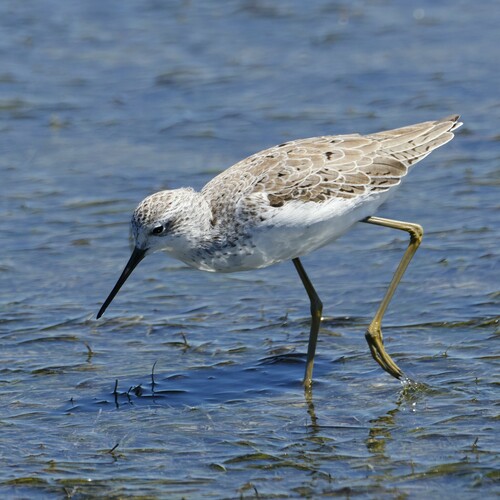 Marsh Sandpiper
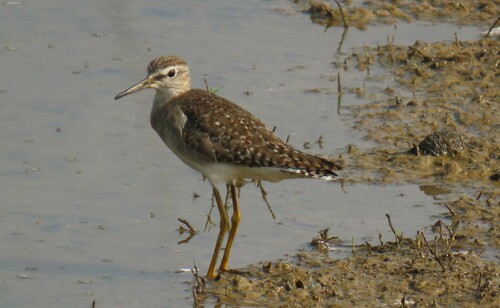 Wood Sandpiper
In short
The most reliable field mark between Marsh Sandpiper and Wood Sandpiper is structure: Marsh Sandpiper is noticeably more slender, with a very long, fine bill and extremely long, spindly yellowish legs, giving it a delicate, elegant look. Wood Sandpiper is shorter-legged and more compact, with a shorter, finer bill and a brown back. Both species show subdued brown upperparts with mottling and yellowish legs, but Marsh Sandpiper is paler and more graceful overall. In flight, Marsh Sandpiper shows a clear white wedge up the back, while Wood Sandpiper’s rump is less contrasting. Immature and adult plumages are similar, so focus on shape and leg length for separation.
Identification tips
- Leg length and structure: Marsh Sandpiper has extremely long, thin yellowish legs that are noticeably longer than Wood Sandpiper’s. This is the most consistent field mark in all ages and seasons.
- Bill shape: Marsh Sandpiper’s bill is long, fine, and straight, giving a needle-like appearance. Wood Sandpiper’s bill is shorter and finer, but not as long or slender as Marsh Sandpiper’s.
- Overall jizz: Marsh Sandpiper looks elegant, slim, and elongated, with a small head, long neck, and upright stance. Wood Sandpiper is more compact, with a shorter neck and less stretched proportions.
- Flight rump pattern: In flight, Marsh Sandpiper shows a striking white wedge up the back, visible in all plumages. Wood Sandpiper has a smaller, less contrasting white rump patch.
- Upperpart color: Both are brown above with darker mottling, but Marsh Sandpiper is paler, especially in non-breeding plumage. Wood Sandpiper’s back is a richer brown.
- Breast spotting: Both have diffuse brownish spots on the breast and neck in breeding plumage; this is not a reliable separator.
- Leg color: Both have yellowish legs, but Marsh Sandpiper’s are longer and spindlier. Wood Sandpiper’s legs may appear slightly duller or greenish-yellow, but this is variable and unreliable.
- Size impression: Marsh Sandpiper is slightly larger and longer, but the difference is subtle; focus on shape and leg length instead of overall size.
- Habitat context: If the bird is in deeper water or more open, grassy wetlands, Marsh Sandpiper is more likely. Wood Sandpiper prefers shallower margins and can be found in smaller pools or more vegetated areas.
- Behavior: Marsh Sandpiper moves with a more elegant, upright gait, often wading deeper. Wood Sandpiper is more compact and may appear more active or hurried.
- Juvenile/immature confusion: Both species’ young birds look similar; there are no strong age-specific upperwing or flight marks to separate them, so rely on structure and flight rump pattern.
- Perched vs. in flight: Leg length and bill shape are easiest to judge when the bird is standing or walking. In flight, focus on the white wedge up the back for Marsh Sandpiper.
- Group context: If mixed with other shanks, Marsh Sandpiper stands out for its elegance and long legs; Wood Sandpiper blends in more with other small waders.
- Voice: Not diagnostic with available sources; do not rely on calls for separation.
- Seasonal variation: Both species are paler in winter, but Marsh Sandpiper remains more delicate and pale overall. Breeding plumage brings more mottling, but the structural differences persist year-round.
Size
Both species are small shanks, but Marsh Sandpiper averages slightly heavier (mean body mass ~71.5g vs. 67.5g for Wood Sandpiper [wikidata]). Marsh Sandpiper is also longer (22–26 cm length, 55–59 cm wingspan), but these differences are subtle in the field. The main impression is that Marsh Sandpiper is more elongated and elegant, with longer legs and bill, while Wood Sandpiper is the smallest shank, appearing more compact and less stretched.
Plumage
For both adults and immatures, plumage differences are subtle and easily confused. Both species have subdued brown upperparts with darker mottling and diffuse brownish spots on the breast and neck in breeding plumage. Marsh Sandpiper is generally paler, especially in winter, and has a distinctive white wedge up the back visible in flight (all ages). Wood Sandpiper has a brown back and a less contrasting white rump patch. Both species have yellowish legs, but Marsh Sandpiper’s are much longer and thinner. Juvenile and immature birds do not show strong age-specific upperwing patterns that separate them, so focus on structure and flight rump pattern.
Behaviour
Both species forage in shallow water and wet mud, probing for invertebrates. Marsh Sandpiper’s longer legs allow it to wade deeper and move with a more elegant, upright gait. Wood Sandpiper is more likely to be seen in slightly drier margins or shallower water, moving with a more compact posture. Both species can be active and alert, but Marsh Sandpiper’s movements are more graceful and less hurried.
Habitat
Both species favor freshwater wetlands, marshes, and wet grasslands, but Marsh Sandpiper breeds in open grassy steppe and taiga wetlands, often in more open, less vegetated areas. Wood Sandpiper is more flexible, found in a wider variety of freshwater and wetland habitats, including smaller pools, muddy margins, and sometimes more vegetated spots. Both avoid strictly coastal or marine habitats.