Birdr

Orange-billed Nightingale-Thrush vs Rufous-backed Robin

Catharus aurantiirostris versus Turdus rufopalliatus

Play a quiz with Orange-billed Nightingale-Thrush and Rufous-backed Robin
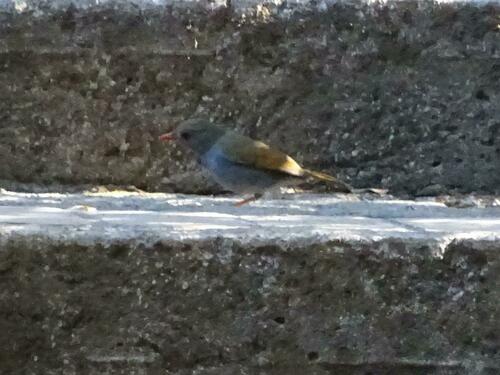
Orange-billed Nightingale-Thrush (Catharus aurantiirostris) Orange-billed Nightingale-Thrush
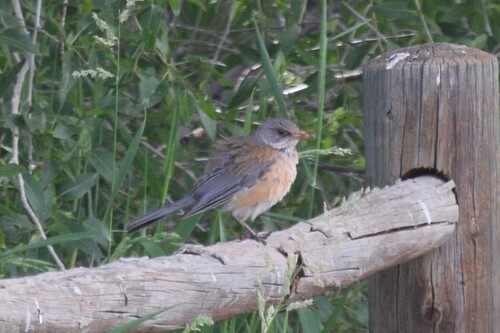
Rufous-backed Robin (Turdus rufopalliatus) Rufous-backed Robin

Media

Loading…

In short

The bill color is the most reliable field mark: the Orange-billed Nightingale-Thrush has a distinctive orange bill, while the Rufous-backed Robin has a dark bill. Both species are thrushes, but they differ in size and plumage patterns, with the Robin being larger and more colorful.

Identification tips

Size

The Rufous-backed Robin is larger and more robust than the smaller, more delicate Orange-billed Nightingale-Thrush.

Plumage

The Orange-billed Nightingale-Thrush has a more uniform brown plumage with a distinctive orange bill. In contrast, the Rufous-backed Robin features a gray head, white throat with black streaks, and a deep rufous back and wings, with orange-chestnut underparts.

Behaviour

The Orange-billed Nightingale-Thrush is often seen hopping on the ground or singing from low perches in dense thickets. The Rufous-backed Robin is more likely to be seen in a variety of forest types, often at higher elevations.

Habitat

The Orange-billed Nightingale-Thrush prefers dense thickets, while the Rufous-backed Robin inhabits a range of forest types from semi-arid to humid, primarily in western and central Mexico.

Voice

The Orange-billed Nightingale-Thrush has a less musical, drier song compared to other thrushes, with a nasal, upslurred call note. The Rufous-backed Robin's vocalizations are not detailed here.

Submit a better description

Use the same sections as the comparison. Your text is published immediately.

The bill color is the most reliable field mark: the Orange-billed Nightingale-Thrush has a distinctive orange bill, while the Rufous-backed Robin has a dark bill. Both species are thrushes, but they differ in size and plumage patterns, with the Robin being larger and more colorful.

  • Bill color: Orange in the Nightingale-Thrush, dark in the Robin.
  • Size: The Robin is larger and more robust.
  • Plumage: Look for the Robin's gray head and rufous back versus the Nightingale-Thrush's more uniform brown.
  • Habitat: Note the Robin's preference for varied forest types and the Nightingale-Thrush's affinity for dense thickets.

The Rufous-backed Robin is larger and more robust than the smaller, more delicate Orange-billed Nightingale-Thrush.

The Orange-billed Nightingale-Thrush has a more uniform brown plumage with a distinctive orange bill. In contrast, the Rufous-backed Robin features a gray head, white throat with black streaks, and a deep rufous back and wings, with orange-chestnut underparts.

The Orange-billed Nightingale-Thrush is often seen hopping on the ground or singing from low perches in dense thickets. The Rufous-backed Robin is more likely to be seen in a variety of forest types, often at higher elevations.

The Orange-billed Nightingale-Thrush prefers dense thickets, while the Rufous-backed Robin inhabits a range of forest types from semi-arid to humid, primarily in western and central Mexico.

The Orange-billed Nightingale-Thrush has a less musical, drier song compared to other thrushes, with a nasal, upslurred call note. The Rufous-backed Robin's vocalizations are not detailed here.

Discard your changes?

You have unsaved edits. If you leave now, those changes will be lost.

Orange-billed Nightingale-Thrush · Rufous-backed Robin · My Tricky Birds