
Pallas's Sandgrouse vs Great Bustard
Syrrhaptes paradoxus versus Otis tarda
Play a quiz with Pallas's Sandgrouse and Great Bustard
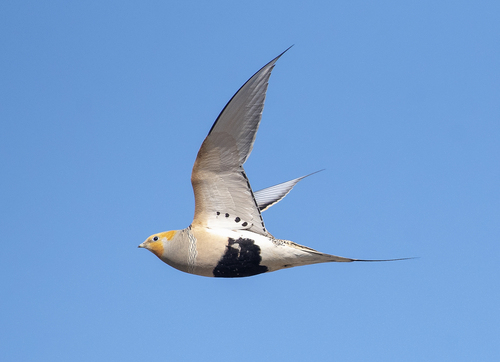 Pallas's Sandgrouse
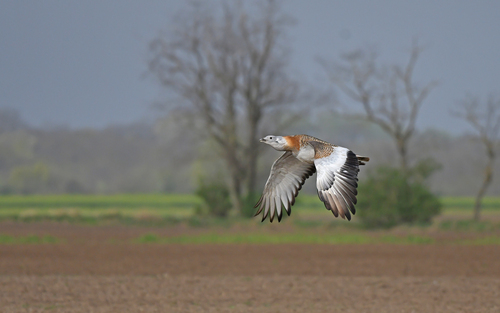 Great Bustard
In short
Pallas's Sandgrouse and Great Bustard are easily distinguished by size and structure. The sandgrouse is much smaller and more pigeon-like, while the bustard is large and robust. Their habitats also differ significantly, with the sandgrouse favoring arid regions and the bustard preferring open grasslands.
Identification tips
- Size and Structure: Note the significant size difference; the bustard is much larger.
- Habitat: Consider the habitat; sandgrouse are in arid areas, bustards in grasslands.
- Plumage: Look for the more cryptic plumage of the sandgrouse versus the varied pattern of the bustard.
Size
Pallas's Sandgrouse is much smaller and more compact compared to the large and robust Great Bustard.
Plumage
The sandgrouse has a more pigeon-like appearance with cryptic plumage, while the bustard has a more striking and varied pattern.
Habitat
Pallas's Sandgrouse is typically found in arid and semi-arid regions, whereas the Great Bustard inhabits open grasslands and steppes.