Birdr

Sooty Tern vs Whiskered Tern

Onychoprion fuscatus versus Chlidonias hybrida

Play a quiz with Sooty Tern and Whiskered Tern
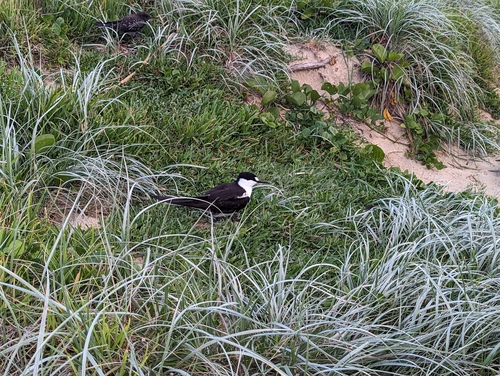
Sooty Tern (Onychoprion fuscatus) Sooty Tern
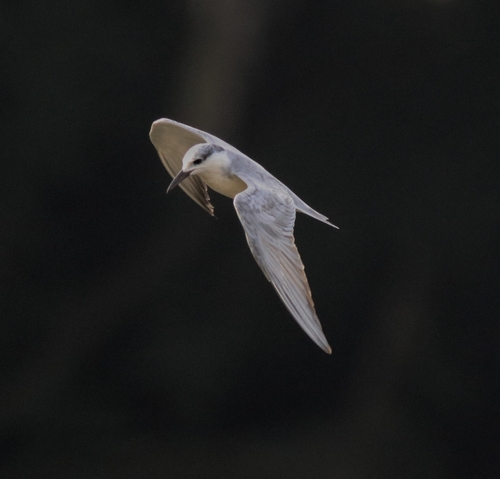
Whiskered Tern (Chlidonias hybrida) Whiskered Tern

Media

Loading…

In short

The Sooty Tern and Whiskered Tern can be distinguished by their plumage and behavior. The Sooty Tern is predominantly black and white with a sleek appearance, while the Whiskered Tern has a more varied plumage with grey and white tones and a distinctive black cap during breeding. Behaviorally, the Sooty Tern is more oceanic, often seen far from land, whereas the Whiskered Tern is more likely to be found in inland or coastal wetlands.

Identification tips

Sooty Tern: Look for black and white plumage, black cap, and oceanic behavior. Whiskered Tern: Note the grey plumage with black cap and white cheeks, and presence in wetlands. Observe behavior and habitat for additional clues.

Size

The Whiskered Tern is smaller, with a wingspan of 64–70 cm, compared to the larger Sooty Tern.

Plumage

Sooty Tern has a stark black and white plumage, with a black cap and white forehead. Whiskered Tern shows more grey tones, with a black cap and white cheeks during breeding, and a pale grey body with a darker belly.

Behaviour

Sooty Tern is highly pelagic, often staying airborne for years and rarely seen on water. Whiskered Tern is more likely to be seen in wetlands, showing more typical tern behavior of plunge-diving.

Habitat

Sooty Tern inhabits tropical and subtropical oceans, nesting on remote islands. Whiskered Tern prefers inland or coastal wetlands.

Voice

Whiskered Tern has a harsher call, described as a rasping 'kyick' or 'cherk', while Sooty Tern's calls are often heard in noisy colonies.

Submit a better description

Use the same sections as the comparison. Your text is published immediately.

The Sooty Tern and Whiskered Tern can be distinguished by their plumage and behavior. The Sooty Tern is predominantly black and white with a sleek appearance, while the Whiskered Tern has a more varied plumage with grey and white tones and a distinctive black cap during breeding. Behaviorally, the Sooty Tern is more oceanic, often seen far from land, whereas the Whiskered Tern is more likely to be found in inland or coastal wetlands.

Sooty Tern: Look for black and white plumage, black cap, and oceanic behavior. Whiskered Tern: Note the grey plumage with black cap and white cheeks, and presence in wetlands. Observe behavior and habitat for additional clues.

The Whiskered Tern is smaller, with a wingspan of 64–70 cm, compared to the larger Sooty Tern.

Sooty Tern has a stark black and white plumage, with a black cap and white forehead. Whiskered Tern shows more grey tones, with a black cap and white cheeks during breeding, and a pale grey body with a darker belly.

Sooty Tern is highly pelagic, often staying airborne for years and rarely seen on water. Whiskered Tern is more likely to be seen in wetlands, showing more typical tern behavior of plunge-diving.

Sooty Tern inhabits tropical and subtropical oceans, nesting on remote islands. Whiskered Tern prefers inland or coastal wetlands.

Whiskered Tern has a harsher call, described as a rasping 'kyick' or 'cherk', while Sooty Tern's calls are often heard in noisy colonies.

Discard your changes?

You have unsaved edits. If you leave now, those changes will be lost.

Sooty Tern · Whiskered Tern · My Tricky Birds