Birdr

White-faced Whistling-Duck vs Mountain Plover

Dendrocygna viduata versus Anarhynchus montanus

Play a quiz with White-faced Whistling-Duck and Mountain Plover
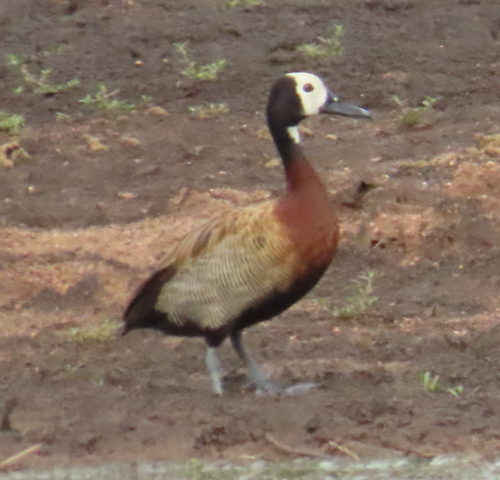
White-faced Whistling-Duck (Dendrocygna viduata) White-faced Whistling-Duck
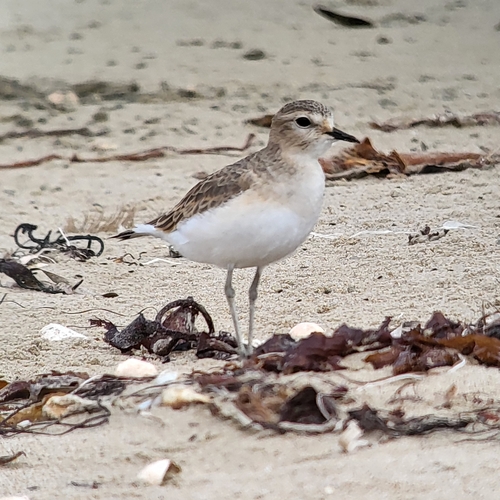
Mountain Plover (Anarhynchus montanus) Mountain Plover

Media

Loading…

In short

The White-faced Whistling-Duck and Mountain Plover are easily distinguishable by habitat and appearance: the duck is a waterfowl with a distinct white face and chestnut body, while the plover is a terrestrial bird with drab plumage suited for camouflage in dry grasslands. Observing their behavior and habitat can quickly clarify identification.

Identification tips

1. Habitat: Check the surroundings; ducks are near water, plovers in dry grasslands. 2. Plumage: Look for the white face and chestnut body of the duck versus the plover's drab, camouflaged appearance. 3. Behavior: Ducks are often in flocks, plovers are solitary and may squat motionless. 4. Size: Ducks are larger and more robust compared to the smaller plovers.

Size

White-faced Whistling-Duck is larger and more robust than the smaller, more delicate Mountain Plover.

Plumage

White-faced Whistling-Duck has a striking white face and chestnut body, while the Mountain Plover is drably marked with a pale brown body, aiding its camouflage.

Behaviour

White-faced Whistling-Ducks are often seen in flocks near water, while Mountain Plovers are solitary or in small groups, often squatting motionless in open grasslands.

Habitat

White-faced Whistling-Duck is found near freshwater bodies, whereas Mountain Plover inhabits dry, open grasslands and agricultural fields.

Voice

White-faced Whistling-Duck is known for its whistling calls, while Mountain Plover is generally quiet and less vocal.

Submit a better description

Use the same sections as the comparison. Your text is published immediately.

The White-faced Whistling-Duck and Mountain Plover are easily distinguishable by habitat and appearance: the duck is a waterfowl with a distinct white face and chestnut body, while the plover is a terrestrial bird with drab plumage suited for camouflage in dry grasslands. Observing their behavior and habitat can quickly clarify identification.

1. Habitat: Check the surroundings; ducks are near water, plovers in dry grasslands. 2. Plumage: Look for the white face and chestnut body of the duck versus the plover's drab, camouflaged appearance. 3. Behavior: Ducks are often in flocks, plovers are solitary and may squat motionless. 4. Size: Ducks are larger and more robust compared to the smaller plovers.

White-faced Whistling-Duck is larger and more robust than the smaller, more delicate Mountain Plover.

White-faced Whistling-Duck has a striking white face and chestnut body, while the Mountain Plover is drably marked with a pale brown body, aiding its camouflage.

White-faced Whistling-Ducks are often seen in flocks near water, while Mountain Plovers are solitary or in small groups, often squatting motionless in open grasslands.

White-faced Whistling-Duck is found near freshwater bodies, whereas Mountain Plover inhabits dry, open grasslands and agricultural fields.

White-faced Whistling-Duck is known for its whistling calls, while Mountain Plover is generally quiet and less vocal.

Discard your changes?

You have unsaved edits. If you leave now, those changes will be lost.

White-faced Whistling-Duck · Mountain Plover · My Tricky Birds