Birdr

Yellow-bellied Flycatcher vs Alder Flycatcher

Empidonax flaviventris versus Empidonax alnorum

Play a quiz with Yellow-bellied Flycatcher and Alder Flycatcher
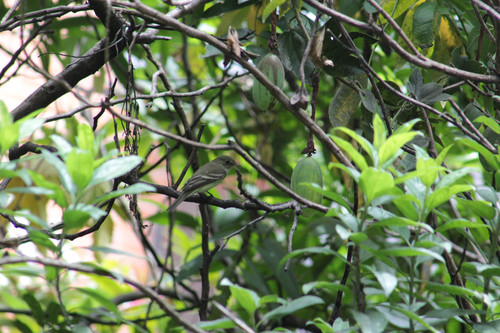
Yellow-bellied Flycatcher (Empidonax flaviventris) Yellow-bellied Flycatcher
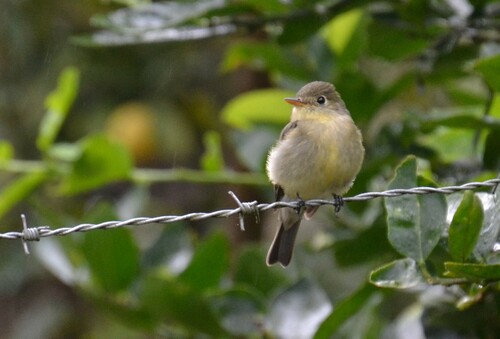
Alder Flycatcher (Empidonax alnorum) Alder Flycatcher

Media

Loading…

In short

The Yellow-bellied Flycatcher and Alder Flycatcher are both small, similar-looking Empidonax flycatchers, best distinguished by habitat and vocalizations. Yellow-bellied Flycatchers prefer mossy, coniferous forests, while Alder Flycatchers are more often found in shrubby wetlands. Their songs and calls are distinct, making vocalizations a reliable field mark.

Identification tips

Size

Both species are small and similar in size, typical of Empidonax flycatchers.

Plumage

Plumage differences are subtle: Yellow-bellied Flycatchers have a more distinctly yellow wash on the belly, while Alder Flycatchers tend to have a more olive or grayish tone. Both have a similar eye-ring and wing bars.

Behaviour

Both species are inconspicuous and often remain hidden in dense vegetation. Yellow-bellied Flycatchers may be more pugnacious near their nests.

Habitat

Yellow-bellied Flycatchers are found in cool, moist coniferous or mixed forests, bogs, and muskegs. Alder Flycatchers prefer shrubby wetlands and areas with knee-deep water and muck.

Voice

Yellow-bellied Flycatchers have a soft, distinctive song that can be confused with other species, while Alder Flycatchers have a more distinct 'fee-bee-o' song. Vocalizations are a key distinguishing feature.

Submit a better description

Use the same sections as the comparison. Your text is published immediately.

The Yellow-bellied Flycatcher and Alder Flycatcher are both small, similar-looking Empidonax flycatchers, best distinguished by habitat and vocalizations. Yellow-bellied Flycatchers prefer mossy, coniferous forests, while Alder Flycatchers are more often found in shrubby wetlands. Their songs and calls are distinct, making vocalizations a reliable field mark.

  • Habitat: Look for Yellow-bellied Flycatchers in mossy, coniferous forests; Alder Flycatchers in shrubby wetlands.
  • Vocalizations: Learn their distinct songs; Yellow-bellied's is softer, Alder's is a sharp 'fee-bee-o'.
  • Plumage: Note the yellow wash on Yellow-bellied's belly compared to Alder's more olive tone.
  • Season: Consider the timing of your observation, as Yellow-bellied Flycatchers have a shorter breeding season.

Both species are small and similar in size, typical of Empidonax flycatchers.

Plumage differences are subtle: Yellow-bellied Flycatchers have a more distinctly yellow wash on the belly, while Alder Flycatchers tend to have a more olive or grayish tone. Both have a similar eye-ring and wing bars.

Both species are inconspicuous and often remain hidden in dense vegetation. Yellow-bellied Flycatchers may be more pugnacious near their nests.

Yellow-bellied Flycatchers are found in cool, moist coniferous or mixed forests, bogs, and muskegs. Alder Flycatchers prefer shrubby wetlands and areas with knee-deep water and muck.

Yellow-bellied Flycatchers have a soft, distinctive song that can be confused with other species, while Alder Flycatchers have a more distinct 'fee-bee-o' song. Vocalizations are a key distinguishing feature.

Discard your changes?

You have unsaved edits. If you leave now, those changes will be lost.

Yellow-bellied Flycatcher · Alder Flycatcher · My Tricky Birds