
Yellow-bellied Flycatcher vs Hammond's Flycatcher
Empidonax flaviventris versus Empidonax hammondii
Play a quiz with Yellow-bellied Flycatcher and Hammond's Flycatcher
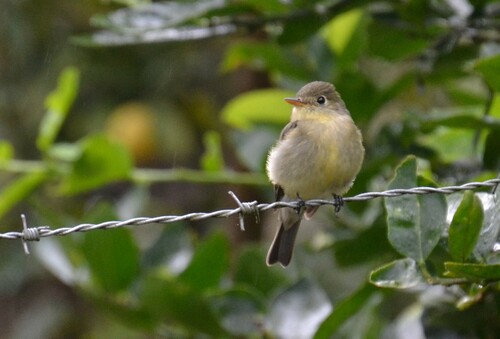 Yellow-bellied Flycatcher
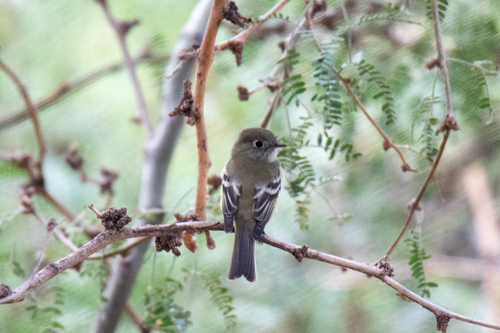 Hammond's Flycatcher
In short
Yellow-bellied Flycatcher and Hammond's Flycatcher are both small, elusive Empidonax flycatchers, making them challenging to differentiate. The Yellow-bellied Flycatcher is often found in mossy, forested habitats, while Hammond's Flycatcher prefers mature coniferous forests. Observing habitat and subtle plumage differences can aid in identification.
Identification tips
- Habitat: Check the surrounding environment; Yellow-bellied prefers mossy forests, while Hammond's favors mature coniferous forests. 2. Plumage: Look for the yellow wash on the belly of the Yellow-bellied Flycatcher. 3. Behavior: Note the foraging style; Hammond's is more aerial in its insect-catching behavior.
Plumage
Yellow-bellied Flycatcher has a more pronounced yellow wash on its belly, which blends with its mossy forest habitat. Hammond's Flycatcher typically has a more muted, grayish-green tone overall, lacking the distinct yellow belly.
Behaviour
Hammond's Flycatcher is primarily an aerial forager, often seen capturing insects on the wing. Yellow-bellied Flycatcher is more reclusive and often heard rather than seen.
Habitat
Yellow-bellied Flycatcher is associated with mossy muskeg forests in summer and Middle American rainforests in winter. Hammond's Flycatcher prefers mature and old-growth coniferous forests.
Yellow-bellied Flycatcher · Hammond's Flycatcher · My Tricky Birds