
Titirijí Cabecicanela vs Birro Común
Poecilotriccus plumbeiceps frente a Hirundinea ferruginea
Juega un quiz con Titirijí Cabecicanela y Birro Común
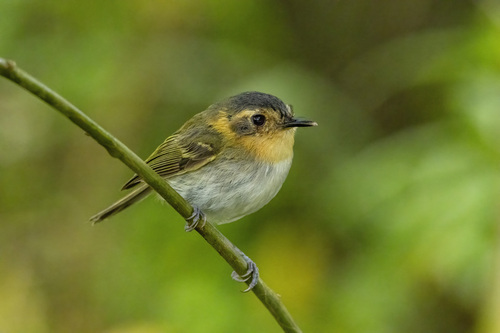 Titirijí Cabecicanela
 Birro Común
En breve
El Titirijí Cabecicanela se identifica mejor por sus brillantes lados color canela en la cabeza y auriculares oliváceos contrastantes, mientras que el Birro Común es más robusto con un patrón de plumaje diferente. Ambas especies se pueden encontrar en áreas boscosas, pero sus comportamientos y hábitats difieren significativamente.
Consejos de identificación
Busca los brillantes lados color canela en la cabeza y auriculares oliváceos en el Titirijí Cabecicanela. Nota el tamaño más pequeño y el comportamiento de forrajeo solitario o en parejas en vegetación densa.
Tamaño
El Birro Común es generalmente más robusto en comparación con el más pequeño Titirijí Cabecicanela.
Plumaje
El Titirijí Cabecicanela tiene brillantes lados color canela en la cabeza con una corona y auriculares oliváceos, mientras que el Birro Común no comparte este patrón específico en la cabeza.
Comportamiento
El Titirijí Cabecicanela forrajea solitariamente o en parejas con cortas sallies en el sotobosque, mientras que el comportamiento del Birro Común no se detalla aquí.
Hábitat
El Titirijí Cabecicanela se encuentra en el sotobosque de bosques húmedos. El hábitat del Birro Común no se especifica aquí, pero difiere de la preferencia de vegetación densa del Titirijí Cabecicanela.