
Todirostre gorgeret vs Moucherolle hirondelle
Poecilotriccus plumbeiceps contre Hirundinea ferruginea
Faire un quiz avec Todirostre gorgeret et Moucherolle hirondelle
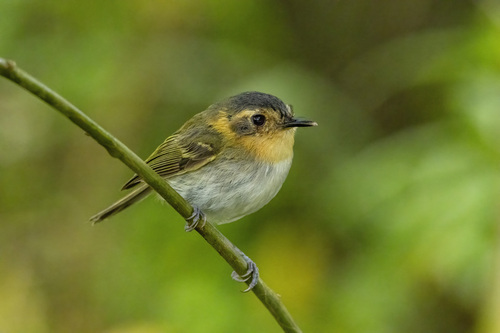 Todirostre gorgeret
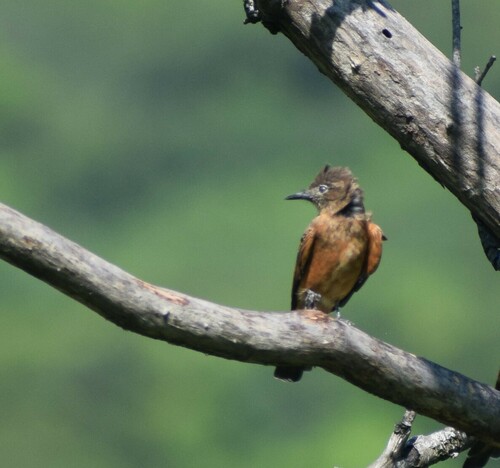 Moucherolle hirondelle
En bref
Le Todirostre gorgeret est mieux identifié par ses côtés buffy vifs de la tête et ses auriculaires olivâtres contrastants, tandis que le Moucherolle hirondelle est plus robuste avec un motif de plumage différent. Les deux espèces peuvent être trouvées dans des zones forestières, mais leurs comportements et habitats diffèrent considérablement.
Conseils d’identification
Recherchez les côtés buffy vifs de la tête et les auriculaires olivâtres chez le Todirostre gorgeret. Notez la taille plus petite et le comportement de recherche alimentaire solitaire ou en couple dans la végétation dense.
Taille
Le Moucherolle hirondelle est généralement plus robuste par rapport au plus petit Todirostre gorgeret.
Plumage
Le Todirostre gorgeret a des côtés buffy vifs de la tête avec une couronne et des auriculaires olivâtres, tandis que le Moucherolle hirondelle ne partage pas ce motif spécifique de tête.
Comportement
Le Todirostre gorgeret cherche sa nourriture de manière solitaire ou en couple avec de courtes sorties dans le sous-bois, tandis que le comportement du Moucherolle hirondelle n'est pas détaillé ici.
Habitat
Le Todirostre gorgeret se trouve dans le sous-bois des forêts humides. L'habitat du Moucherolle hirondelle n'est pas spécifié ici, mais il diffère de la préférence pour la végétation dense du Todirostre gorgeret.
Todirostre gorgeret · Moucherolle hirondelle · Mes oiseaux difficiles